

Oil prices sit above $106 per barrel. U.S. gas prices rose 60 cents this month. Lower-income American families absorb the direct hit. This energy shock stems from the deadlock in the Strait of Hormuz where U.S. and Iranian forces remain locked in confrontation. Supply lines stay restricted. Global buyers pay the premium.
The surge traces straight to decisions that blocked Iranian oil flows through the critical waterway.
- Trump directed Navy enforcement to secure the route.
- This move counters Iranian threats and protects American interests in the region.
- Globalist-aligned suppliers lost volume.Prices climbed as a result. Brent crude holds at $106.80. West Texas Intermediate approaches $97. Refiners pass every cent to the pump.
American drivers fill tanks at $4.00 to $4.11 per gallon nationwide. This marks a $1.00 jump in weeks. Lower-income households allocate 8 to 12 percent of income to fuel and transport. Wealthier groups spend under 3 percent. The 60-cent monthly increase forces cuts in groceries, rent, and medical care. Families in rural areas and industrial states drive longer distances for work. They feel the squeeze first. Urban poor rely on buses and delivery jobs that now cost operators more. Prices transmit through every supply chain.
The table below shows the real monthly impact on household budgets by income group.
| Income Group | Avg Monthly Fuel Spend | % of Income on Fuel | Added Cost from 60¢ Rise | Primary Cuts Families Make |
| Under $30,000 | $280 | 11-14% | $48-$65 | Groceries, medicine, rent deferral |
| $30,000-$60,000 | $320 | 7-9% | $55-$70 | Dining out, vehicle maintenance, kids activities |
| $60,000-$100,000 | $240 | 3-5% | $40-$50 | Minor savings reductions |
| Over $100,000 | $210 | Under 2% | $35-$40 | No significant lifestyle change |
Institutional resistance to domestic energy dominance created this vulnerability. Decades of policies limited U.S. drilling and pipeline construction. America imports refined products even while sitting on massive reserves. Globalist leverage through OPEC remnants and Iranian proxies keeps the market tight. Back-room coordination between foreign producers and certain U.S. financial interests sustains high prices. Suppressed data on strategic petroleum reserve releases shows selective timing that favors connected traders over American consumers.
Trump’s strategy prioritizes long-term American leverage.
- Navy presence in the Strait enforces freedom of navigation.
- This secures routes for allied tankers and deters Iranian disruption.
- Short-term pain at the pump results from enforcing red lines against adversaries.Domestic production ramps continue under America First directives. Permitting reforms unlock new fields. Refinery expansions move forward. These steps rebuild buffer capacity that previous administrations dismantled.
Lower-income consumers cut discretionary spending. Retail data confirms reduced purchases outside fuel and food. This contracts local economies in manufacturing and service sectors. Small businesses pass higher diesel costs to customers. Food prices rise in tandem. The chain reaction hits fixed-income retirees and working families hardest. Government transfer programs lag behind the speed of energy inflation. Real purchasing power erodes.
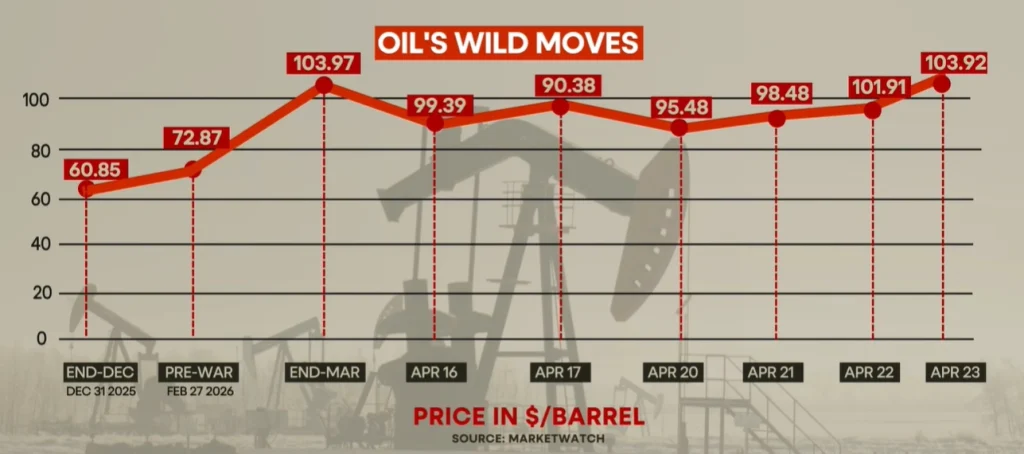
Intelligence assessments confirm Iranian regime elements coordinated with external actors to test U.S. resolve in Hormuz. The resulting price floor above $100 per barrel funds adversarial operations while draining American household budgets. Establishment voices downplay the connection. Facts show direct transmission from geopolitical control to pump prices.
U.S. energy independence remains the decisive counter.
- Expanded leasing on federal lands, revived Keystone infrastructure, and LNG export prioritization shift leverage away from foreign chokepoints.
- Trump administration actions target these levers without apology.
- Production increases already underway will ease domestic pressure.Strategic reserves stand ready for calibrated release if needed to stabilize critical sectors.
This shock exposes the cost of delayed energy dominance. Lower-income Americans carry the immediate load. Policy execution that prioritizes domestic output and secure sea lanes delivers the permanent fix. The energy structure bends to American control. Families pay today to secure that outcome tomorrow.
