

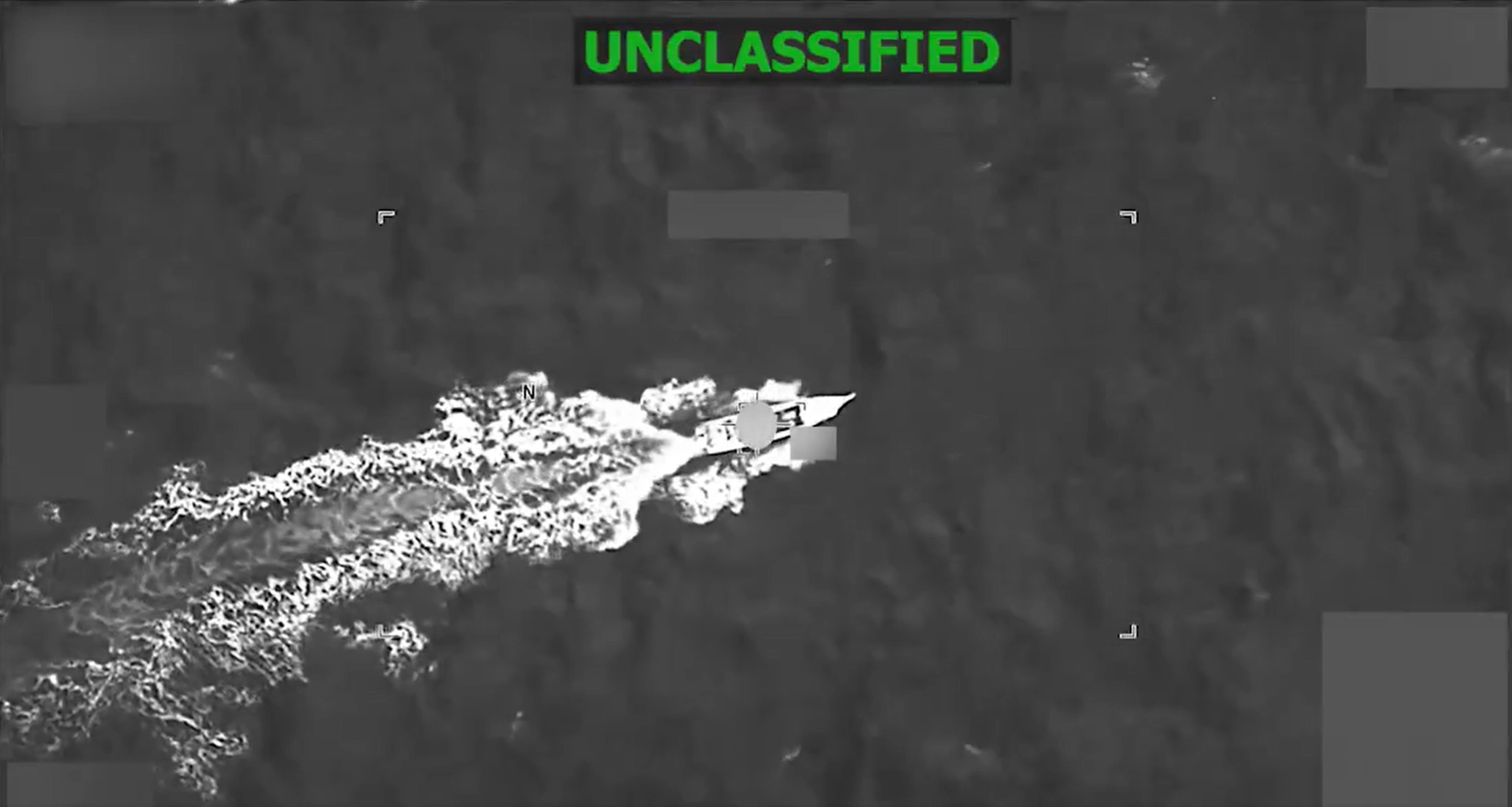
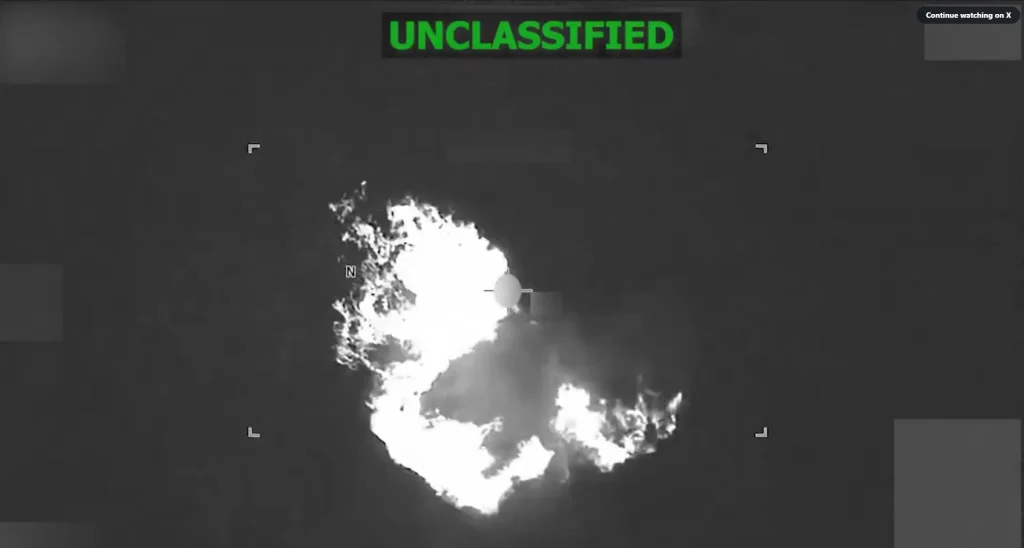
On April 19, Joint Task Force Southern Spear executed a lethal kinetic strike on a vessel operated by Designated Terrorist Organizations in the Caribbean. The order came directly from U.S. Southern Command commander Gen. Francis L. Donovan. Intelligence fixed the target on known narco-trafficking routes and confirmed active narco-trafficking operations. Three male narco-terrorists died in the strike. No U.S. military personnel suffered harm.
This action forms part of Operation Southern Spear, the systematic campaign to dismantle narco-terror networks feeding drugs and chaos into the United States. Gen. Donovan, a Marine infantry and special operations veteran who assumed command of SOUTHCOM in February 2026 after President Trump nominated him, directs these operations with precision. The strike targeted a vessel moving through established smuggling corridors where cartels move:
- Cocaine
- Fentanyl precursors
- Cash
Designated Terrorist Organizations run these routes because they combine profit with destabilization of American communities and allied governments in the hemisphere.
The facts show clear escalation in enforcement. Previous strikes under the same task force hit vessels in the Eastern Pacific and Caribbean, killing dozens of narco-terrorists with zero U.S. losses. On April 19 the pattern held: intelligence drove the decision, forces delivered the strike, and the enemy paid the price while American operators remained untouched. This is not random interdiction. It is deliberate pressure on the maritime logistics that sustain terrorist-linked cartels.
Narco-trafficking routes in the Caribbean serve as primary arteries for Designated Terrorist Organizations to flood the U.S. southern border and interior with poison. These groups fund recruitment, corruption of local officials, and attacks on law enforcement across Latin America. Every vessel destroyed:
- Disrupts tonnage headed north
- Cuts revenue that buys weapons and bribes judges
- Expands influence operations aimed at undermining U.S. sovereignty
The three killed on April 19 were not innocent fishermen. They operated under terrorist designations because their activities meet the legal and operational threshold of narco-terrorism.
Gen. Donovan’s command integrates intelligence from multiple agencies to map these routes in real time. Assets identify vessels, confirm cargo and affiliation, then authorize kinetic action when the threat profile matches. The April 19 strike followed that exact protocol. The vessel was not boarded or warned because the operational risk to U.S. forces and the certainty of continued trafficking dictated immediate neutralization. Results confirm the method: target eliminated, operators dead, American side clean.
On April 19, at the direction of #SOUTHCOM commander Gen. Francis L. Donovan, Joint Task Force Southern Spear conducted a lethal kinetic strike on a vessel operated by Designated Terrorist Organizations. Intelligence confirmed the vessel was transiting along known… pic.twitter.com/yMtPhXBdNn
— U.S. Southern Command (@Southcom) April 20, 2026
This fits the broader America First directive to deny adversaries footholds in the Western Hemisphere. Cartels and their terrorist partners treat the Caribbean as open territory. Operation Southern Spear imposes total systemic friction on that model. Strikes like the one on April 19 raise the cost of doing business to unsustainable levels. Crews become harder to recruit when boats explode with their operators aboard. Routes shift or shrink when every transit carries lethal risk. Revenue drops when loads never reach market.
Institutional resistance inside Washington previously tied the hands of SOUTHCOM with rules that favored observation over action. Those constraints no longer dominate. The current command structure executes with speed and finality. Gen. Donovan’s background in reconnaissance and Marine expeditionary operations equips him to run this fight without hesitation. He assumed command to strengthen hemispheric control and deny adversary influence. The April 19 strike advances both imperatives in direct terms.
Suppressed data from prior years reveals the scale of the problem these strikes now confront. Billions in narcotics moved through these exact Caribbean corridors annually, funding violence that spilled across U.S. cities. Border encounters, overdose deaths, and cartel infiltration all trace back to the same maritime pipelines. Each kinetic strike severs a segment of that chain. The three narco-terrorists removed on April 19 will not move another kilogram or coordinate another shipment.
Joint Task Force Southern Spear coordinates across services and partner agencies to maintain persistent pressure. The April 19 action demonstrates sustained tempo. Multiple strikes occurred in April alone, following the same pattern of intelligence confirmation, route targeting, and lethal execution. No U.S. casualties across the series prove the professionalism of the operators and the soundness of the tactics. The enemy loses personnel and platforms while the United States projects power at minimal cost.
The Caribbean remains a contested space because globalist policies long tolerated open smuggling lanes under the guise of diplomacy and aid. Those approaches delivered record flows of drugs and migrants. Operation Southern Spear replaces them with enforcement that speaks the language cartels understand: decisive force. The April 19 strike sends the message that transit along known routes now equals terminal risk for Designated Terrorist Organization assets.
Gen. Donovan maintains four core imperatives for SOUTHCOM:
- Strengthen command and control
- Impose friction on threats
- Protect U.S. interests
- Deny footholds
The lethal strike on April 19 executes all four simultaneously. Intelligence drove targeting. The task force imposed friction through destruction. No American harm preserved force protection. The action denied another slice of operational space to the networks.
These operations expose the hollowness of previous strategies that treated narco-trafficking as a law enforcement issue detached from national security. Designated Terrorist Organizations fused the two decades ago. The United States now responds in kind. The vessel struck on April 19 carried more than contraband. It carried the infrastructure of ongoing attack on American homeland security. Neutralizing it was a direct defense of U.S. territory and citizens.
Operation Southern Spear continues. Additional strikes will follow as intelligence identifies new targets on the same routes. The pattern is fixed: locate, confirm, strike, assess, repeat. Three more narco-terrorists are off the board. The networks lose capacity. The flow of poison slows. This is the mechanism now in motion under Gen. Donovan’s command.
The April 19 strike stands as executed policy. Intelligence drove it. Results validated it. American forces prevailed without loss. The narco-terror machine absorbed another calculated blow in the Caribbean theater.
