


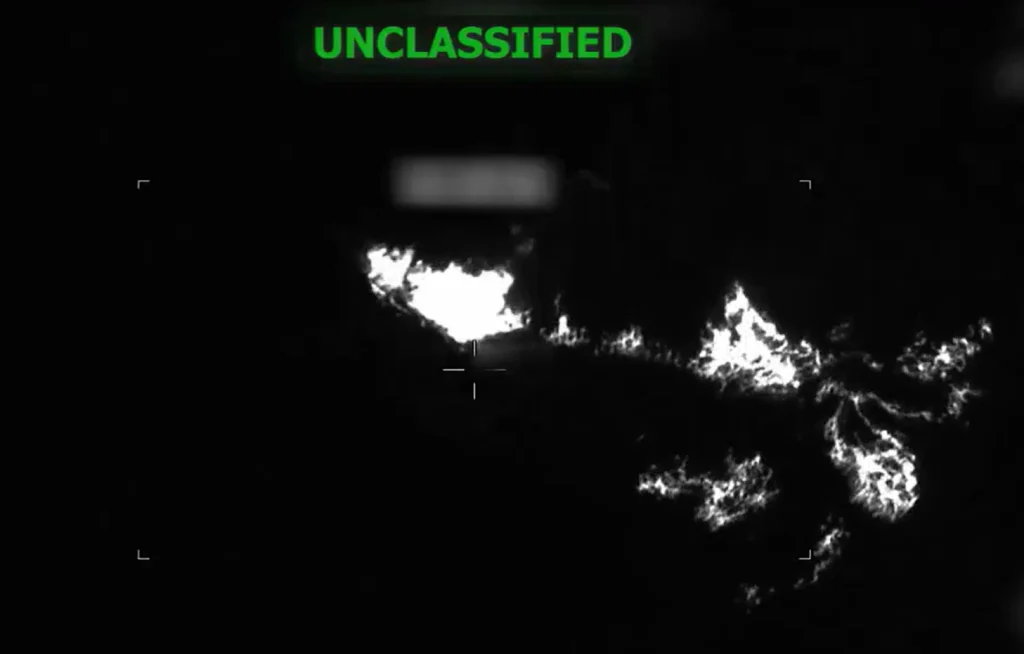
U.S. Southern Command executed a lethal strike on April 26 that killed three narco-traffickers operating a boat in the Pacific. This action formed a direct component of Operation Southern Spear, the campaign launched in late 2025 to dismantle cartel supply lines feeding poison into American cities. Intelligence fixed the vessel on known trafficking routes and confirmed active narco operations. The strike delivered precise destruction with no U.S. forces harmed.
This operation continues the systematic takedown of cartel assets under the America First framework. Joint Task Force Southern Spear directed assets to intercept and eliminate the threat in international waters. The three dead men carried out orders from networks that move fentanyl, cocaine, and methamphetamine precursors across the Pacific toward Mexico and then into the United States. Every kilo stopped here means fewer American deaths on streets from coast to coast. Southern Command maintains constant surveillance over these corridors. The April 26 strike marks another confirmed elimination in a string of successful kinetic actions that have already removed hundreds of operators from the battlefield.
Operation Southern Spear shifted the rules of engagement. Cartels once moved with near impunity because previous administrations tied military hands with bureaucracy and diplomatic concerns. That ended. To counter this, the task force integrates:
- Real-time intelligence from multiple agencies.
- Drone overwatch for persistent monitoring.
- Rapid-response naval and air assets.
Commanders authorize strikes when vessels match profiles of low-profile go-fast boats or semi-submersibles used exclusively for drug runs.
No warnings. No negotiations.
The Pacific route serves as a critical artery because cartel partners exploit vast ocean distances to evade coastal patrols. The April 26 target followed established patterns tracked for months.
🚨 JUST IN: US SOUTHCOM have ANNIHILATED a boat full of narcoterrorists heading to the United States
— Nick Sortor (@nicksortor) April 27, 2026
It seems the attempted to use the cover of last night’s shooting to slip in, hoping American forces were distracted.
Wrong!
3 narcoterrorists dead — 0 US troops harmed. pic.twitter.com/tT4OBF1HQS
Globalist resistance to these operations runs deep inside entrenched institutions. Elements within the State Department and certain international bodies push back against lethal force, claiming concern for human rights while cartel money flows through their allied financial networks. Those objections collapse under the weight of dead Americans. Fentanyl alone kills over 70,000 U.S. citizens each year. The cartels function as terrorist organizations with state-level protection in places like Venezuela, where regime figures direct shipments and take cuts. Operation Southern Spear cuts those ties by force. The Pacific strike directly degrades the logistics that sustain this machine.
Back-channel intelligence reveals cartel leadership rotated crews onto these boats after earlier losses. They bank on volume to overwhelm interdiction. Southern Spear disrupts that calculation. Each strike forces cartels to expend more resources on evasion, rerouting, and replacement operators. The three men killed on April 26 represented immediate revenue loss for their handlers. Intelligence packages linked similar vessels to specific organizations tied to transnational networks. These groups coordinate with human smuggling rings and precursor chemical suppliers from Asia. The Pacific theater connects directly to larger supply chains that end in U.S. overdose statistics.

The operation integrates with broader border security measures. Trump directed the escalation to treat narco-trafficking as a national security threat equivalent to foreign invasion. Southern Command coordinates with Northern Command and domestic law enforcement to create a layered defense consisting of:
- Maritime strikes to prevent route shifting.
- Wall construction and advanced technology on land.
- Increased agent presence to reduce land crossings.
Data from interdictions shows direct correlation between these kinetic actions and reduced seizure volumes in follow-on ports.
Institutional pushback appears in delayed funding requests and media silence on the human cost inside the United States. Establishment figures prioritize optics over results. Southern Spear bypasses that gridlock. Pete Hegseth and operational commanders maintain tight control. The April 26 strike followed intelligence fusion that left zero doubt about the vessel’s purpose. Crews carried no legitimate cargo. Navigation data placed them on vector for handover points used repeatedly by cartel partners. The lethal outcome removed three operatives and destroyed their platform. Debris analysis and follow-up surveillance confirmed the full mission kill.
Cartels adapt by using more sophisticated communications and decoy vessels. Southern Spear counters with persistent presence. Drones and maritime patrol aircraft cover thousands of square miles daily. The task force designates vessels as threats based on speed, profile, origin, and electronic signatures. Once locked, the strike window opens. This process produced dozens of successful engagements since late 2025. Cumulative body count on cartel side exceeds 180 confirmed narco-terrorists eliminated. The Pacific remains a primary focus because distance previously granted safety. No longer.
Suppressed data shows cartel profits fund corruption at multiple government levels in source and transit countries. U.S. strikes impose direct financial pain. Each lost boat and crew costs hundreds of thousands in replacement value plus lost product. Operators face recruitment problems after news of strikes travels through their ranks. Families of the dead receive no pensions from cartel bosses who hide in safe houses. The April 26 action adds pressure on mid-level coordinators who must explain failures up the chain. This internal friction weakens command structures over time.
America First policy rejects endless aid programs that failed for decades. Military power applied decisively produces measurable degradation of enemy capability. Operation Southern Spear demonstrates control of the seas around the Western Hemisphere. The Pacific strike on April 26 forms one link in that chain. Intelligence continues to feed new targets. Task force assets stand ready for immediate follow-on operations. Cartel networks bleed resources while U.S. borders tighten. The flow of poison slows as operators die at sea.
Further strikes will follow. Southern Command holds the initiative. The three narco-traffickers eliminated on April 26 will not deliver their cargo. Their deaths advance the direct protection of American lives from the cartel war machine. This campaign delivers results where diplomacy and half-measures produced only body bags at home. The Pacific remains under surveillance. The next boat that loads product for the United States enters the kill zone.
Southern Spear enforces the line with kinetic certainty.
