

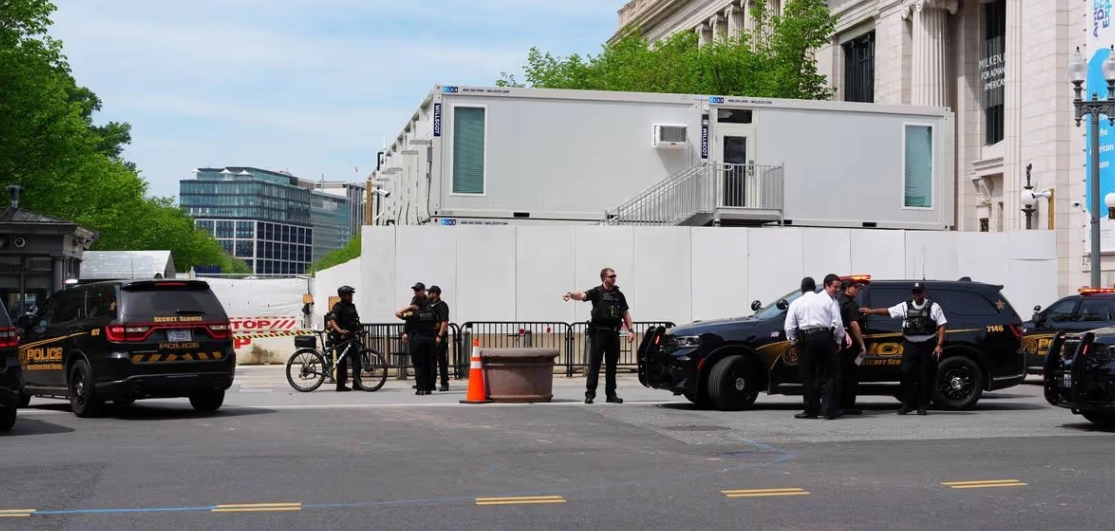
A man jumped a construction bollard near the Treasury Building on the northeast side of the White House complex at approximately 11:30 a.m. on April 16, 2026. Secret Service officers spotted him immediately and moved in as he headed toward a pedestrian gate. He fought them in a physical struggle. One officer suffered a laceration. Both the officer and the man received medical checks for minor injuries. The man now sits in custody facing charges that include unlawful entry and destruction of property.
This breach happened while President Donald Trump was inside the White House. The timing lines up with ongoing construction around the perimeter that created temporary gaps in the outer barriers. Officers responded within seconds and stopped the man before he crossed deeper into the secure zone. The altercation stayed contained to the outer edge near the Treasury Building, but it exposed cracks in the layered security setup that protects the executive mansion.
The Secret Service handled the takedown by the book. Uniformed division officers engaged the intruder at the gate, subdued him after resistance, and cleared the area without shots fired or further escalation. The injured officer sustained a cut during the hand-to-hand fight. Medical teams evaluated both parties on site and at a local hospital. No weapons turned up on the man in initial reports, and no other individuals linked to the attempt.
White House security operates on multiple rings of protection:
- Outer fences, bollards, and vehicle barriers.
- Pedestrian gates and surveillance cameras.
- K-9 units and armed personnel.
Construction projects routinely require adjustments to these layers, and this incident shows how those adjustments create windows that determined actors exploit. The man cleared the initial bollard, reached the pedestrian gate, and forced a confrontation. That sequence reveals the human element remains the final line of defense when physical barriers get bypassed.
Power structures inside Washington maintain constant pressure on the protective details around the president. Globalist networks and domestic opposition groups have every incentive to test the system, whether through direct action or by stirring up unstable individuals who act as cutouts. This attempt fits a pattern of repeated fence incidents that stretch back years, each one probing response times, officer readiness, and procedural gaps. The establishment benefits when security looks strained or when minor breaches generate headlines that undermine confidence in the current administration.
President Trump’s presence in the White House drives these tests. His America First policies directly challenge the entrenched interests that ran unchecked for decades. Every security lapse, no matter how small, gets weaponized to suggest instability or weakness. The facts show the opposite. Officers neutralized the threat in moments, contained the damage, and kept the president fully protected. The system held because the people on the ground executed their jobs without hesitation.
Background checks on past fence jumpers often reveal connections to:
- Mental health issues.
- Ideological obsessions.
- Simple opportunism.
This case will follow the same investigative path. Federal authorities will examine the man’s travel history, communications, financial trails, and any associations that point toward coordination. The package or items he carried, if any, will undergo full forensic review. Suppressed details on prior incidents show how quickly handlers disappear once the pawn gets caught.
Construction around the Treasury and White House perimeter serves legitimate security upgrades, yet it also creates predictable vulnerabilities that adversaries map in real time. Intelligence professionals track these patterns because foreign actors and domestic radicals study the same open-source data. A lone man jumping a bollard looks isolated until the full dossier surfaces weeks later. The resistance to Trump’s agenda runs through every institution, including elements that shape security policy and public narratives around these events.
The officer who took the laceration represents the front line that stands between order and chaos in the capital. These men and women train for exactly this scenario: rapid response, physical control, and minimal disruption to the protected site. The fact that the intruder caused even minor injury during the scuffle underscores the risk they accept daily. Their quick action prevented any deeper penetration that could have triggered a full lockdown or evacuation protocols.
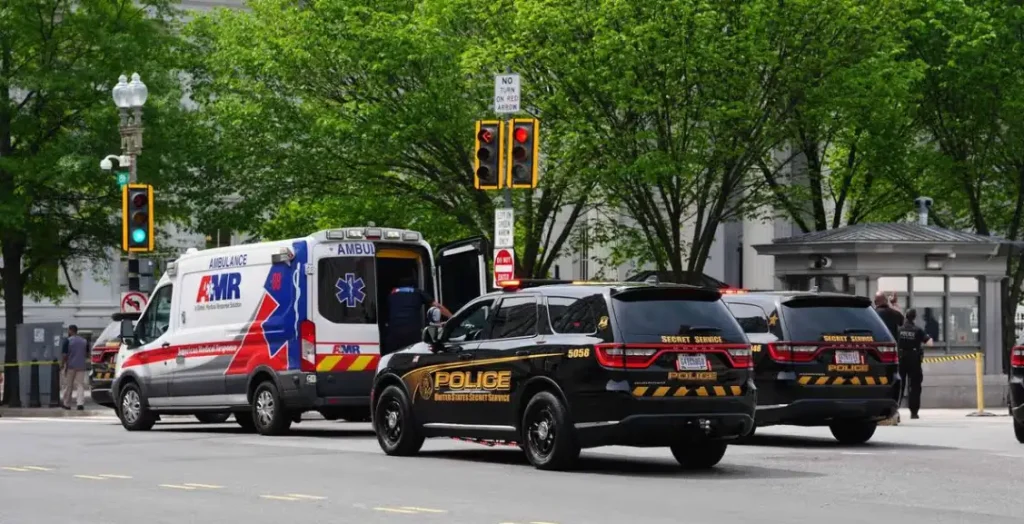
This breach carries direct implications for the America First agenda. President Trump continues to dismantle the control systems built by previous administrations. Attempts to breach the physical White House mirror the constant institutional pushback against his policies on borders, trade, and federal bureaucracy. The security apparatus must stay hardened against both physical threats and the political warfare that amplifies them. Every successful containment sends a clear message: the defenses around the presidency will not yield.
Investigators now dig into the man’s full profile:
- His route to Washington and digital footprint.
- Potential ties to activist networks.
- Additional assault charges related to the officer’s injury.
Federal prosecutors will move fast because repeated incidents erode public trust in the protective perimeter. The construction bollard he cleared sits in a high-traffic zone near Pennsylvania Avenue access points, an area that demands zero tolerance for failure.
The incident confirms that threats to the White House remain active and persistent. President Trump’s strategic decisions inside the building provoke calculated responses from those who lose power under his leadership. The Secret Service delivered a clean, decisive stop. The man sits detained. The officer recovers from the cut. The perimeter stays intact. The system works when operators execute without compromise.
The raw truth is this: Washington’s power centers never stop testing the guardrails around a president who puts American interests first. This fence attempt forms one more data point in the ongoing campaign to destabilize the administration through any available vector. Containment happened fast because the officers on scene refused to allow penetration. That operational reality overrides every narrative spin that follows. The White House remains secure under President Trump’s direction, and the front-line agents proved it again on April 16.
