

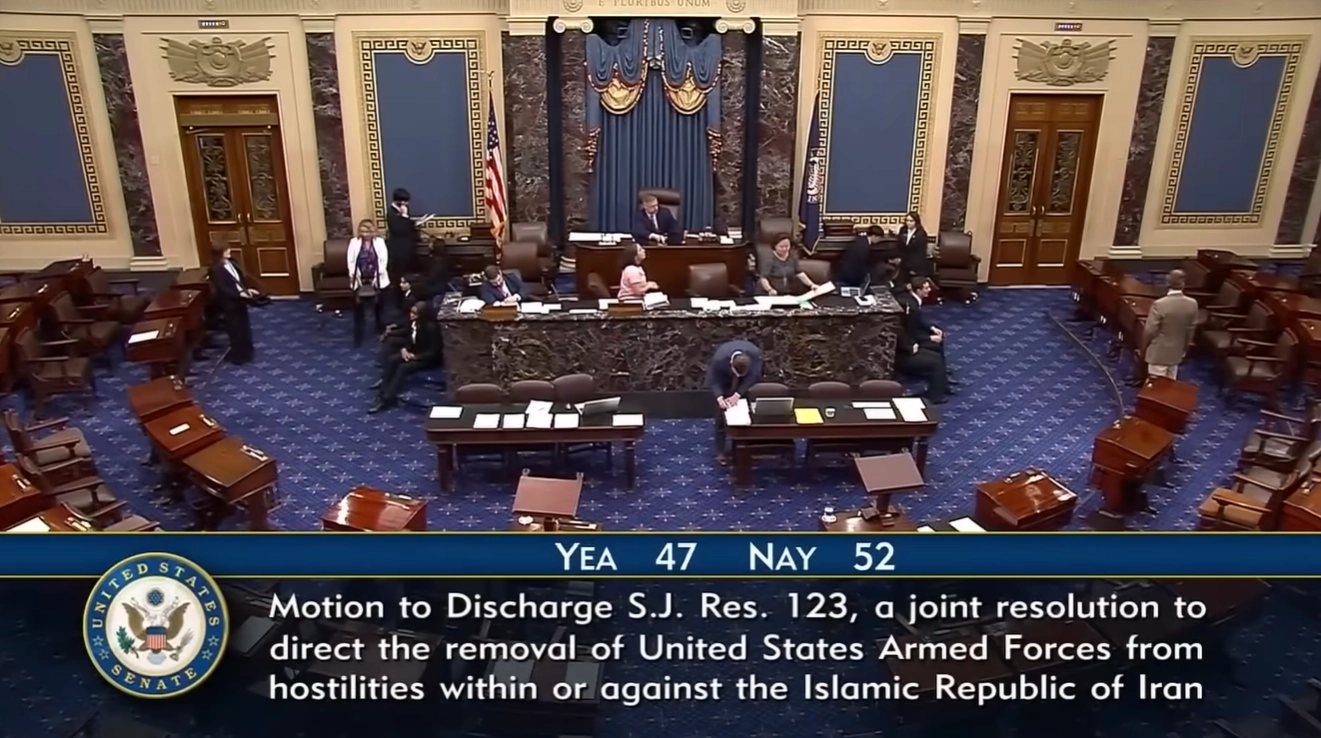
The US Senate blocked a war powers resolution on Iran for the fourth time this month. The vote on April 15 came in at 47-52. Democrats pushed the measure to force withdrawal of US forces from hostilities against Iran unless Congress gives explicit authorization. Republicans held the line and stopped it cold.
This keeps President Trump’s hands free to run the military campaign that started with joint US-Israel strikes on February 28. The resolution would have invoked the 1973 War Powers Act to pull American assets out of the fight. Senate Republicans rejected that limit every time Democrats forced the issue. The pattern shows clear party control in the upper chamber backing the administration’s moves.
- Rand Paul crossed over and voted yes with the Democrats.
- John Fetterman was the lone Democrat who voted no.
- Jim Justice did not vote.
The rest stuck to party lines, identical to the prior three attempts. Democrats have pledged to bring it up weekly, but the numbers do not move. The Senate’s Republican majority refuses to handcuff the commander in chief during active operations that include naval actions in the Strait of Hormuz and support for Israeli strikes.
Trump’s strategy treats the Iran threat as a direct national security matter tied to nuclear breakout risks and proxy attacks on US interests. The administration launched targeted operations to degrade Iranian capabilities without seeking prior congressional sign-off, consistent with how past presidents handled initial responses to imminent dangers. The repeated Senate votes confirm that institutional resistance from the opposition party has no teeth when it comes to reining in executive action here.
Globalist voices in Washington want endless debate and restrictions that tie down American power. The Senate floor shows those efforts collapse under Republican numbers.
Back-room dynamics reveal the real power structure at work. Intelligence assessments shared with key senators highlight:
- Iran’s continued enrichment work and missile programs even during the current two-week ceasefire.
- Close coordination with Israel on timing and targets.
- US naval presence to enforce blockades and deter escalation.
Democrats frame the conflict as unauthorized and endless, but the votes expose their inability to shift the facts on the ground. US forces remain positioned for rapid response if Iran restarts direct attacks or supplies more weapons to its networks.
The 60-day War Powers clock ticks toward the end of April. That deadline forces a choice between formal authorization or withdrawal, yet the Senate’s four rejections signal no appetite for yanking support mid-operation. Trump directs the effort with clear focus on degrading core threats rather than open-ended nation-building.
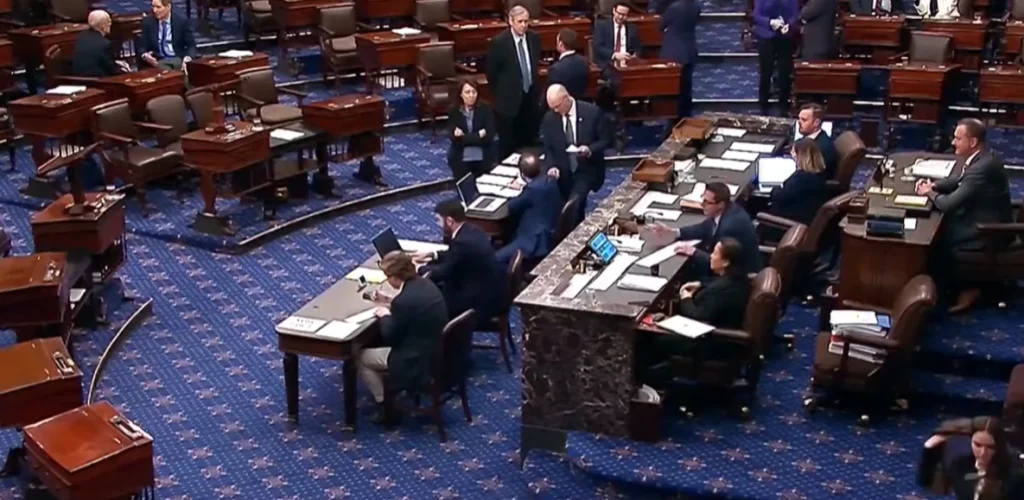
Republican senators prioritize results over procedural theater pushed by the minority. This standoff protects America First priorities against attempts to insert congressional gridlock into real-time military decisions.
The fourth failure locks in continued operational freedom for the duration of the current phase. No withdrawal order goes out.
US involvement in the Iran-Israel conflict proceeds under Trump’s command without the chains the resolution tried to attach.
