

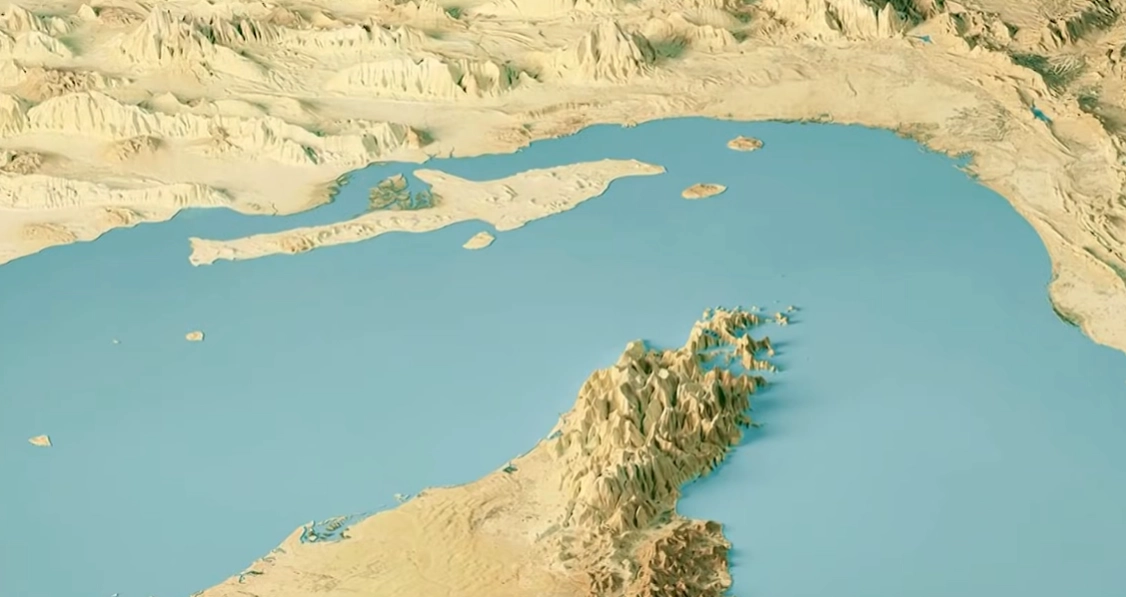
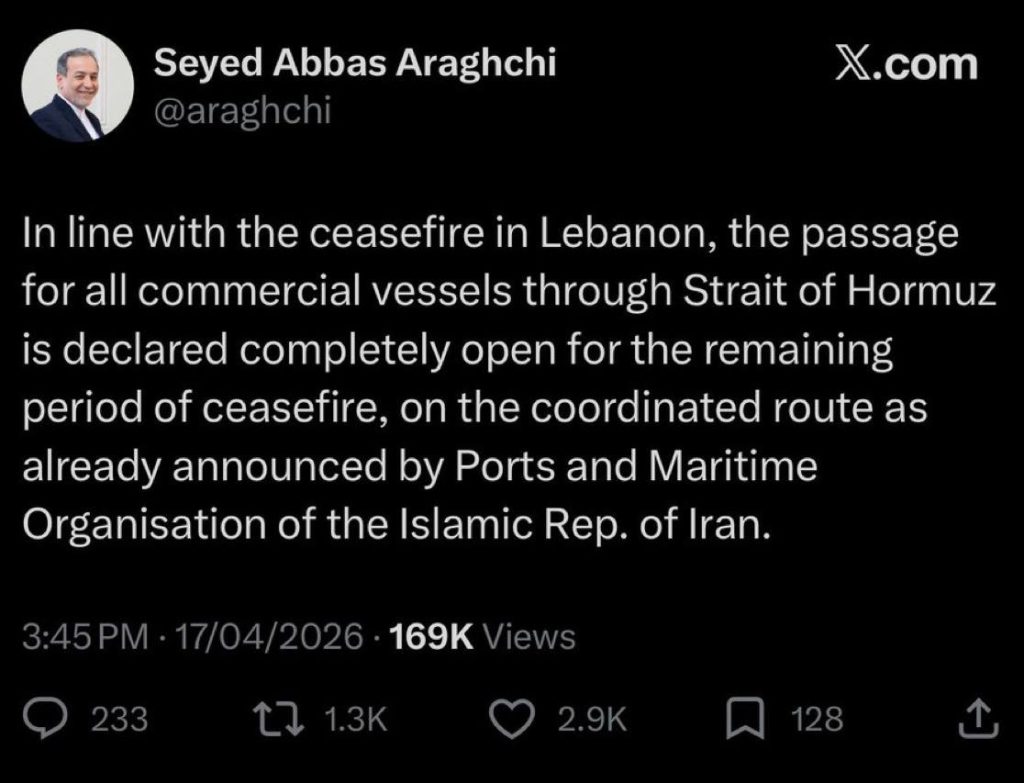
Iran announced at 15:45 on April 17, 2026, that the Strait of Hormuz is completely open to all commercial vessels for the remaining period of the 10-day ceasefire in Lebanon.
Iranian Foreign Minister Abbas Araghchi made the declaration on X. President Trump confirmed the move in his own post, stating the strait is fully open and ready for full passage. Oil prices dropped 11 percent immediately after the announcement.
This comes after months of Iranian closure of the strait starting February 28, 2026, in response to U.S. and Israeli military operations.
- Iran had blocked shipping to U.S., Israeli, and allied ports, attacked vessels, and reduced traffic to near zero.
- The U.S. responded with an aerial campaign from March 19 and a naval blockade of Iranian ports from April 13, turning back at least 13 ships headed to or from Iran.
The opening is temporary and tied directly to the Lebanon truce. It does not lift the U.S. blockade on Iranian ports. Trump stated the blockade stays in full force until Iran reaches a final deal with the United States to end the war.
The Strait of Hormuz carries one-fifth of global oil and LNG. Iran used control of this choke point as leverage after the war began.
- The regime restricted passage, demanded tolls in some cases, and threatened attacks on hostile vessels.
- This disrupted energy markets worldwide and cost Iran billions in lost revenue from its own exports.
The announcement reflects Iran’s weakened position after sustained U.S. pressure. American military action destroyed Iranian naval assets and drones targeting shipping. The blockade cut off Iran’s sea trade routes while keeping the strait itself navigable for non-Iranian commercial traffic under U.S. oversight.
Trump’s strategy forced this moment. He maintained maximum pressure through the blockade and refused to ease restrictions without concrete concessions on Iran’s nuclear program, missiles, and regional proxies. The temporary opening during the Lebanon ceasefire gives Iran a face-saving way to ease economic pain without full surrender, while the U.S. holds the real leverage at the ports.
Back-channel talks in Pakistan and elsewhere showed Iran seeking relief from the blockade.
- The regime faces internal strain from lost oil income and damaged military capacity.
- Global buyers, especially China and India, pushed for resumed flows.
- Yet the U.S. did not blink. The blockade remains the hammer that brought Iran to this point.
This move does not end the conflict. It is a tactical pause. Iran retains the ability to re-close or harass traffic once the ceasefire expires. The regime’s history shows it uses every opening to regroup and rearm. U.S. forces stay positioned to enforce the port blockade and respond to any violation.
The real power structure stays intact: American naval dominance in the Gulf enforces the rules. Iran tested the limits and lost ground. The announcement buys the regime time during the Lebanon truce but leaves the core issues—nuclear breakout capability, missile stockpiles, and proxy networks—unresolved.
Trump’s approach keeps the pressure on until a comprehensive deal materializes. Partial openings tied to temporary truces serve American interests by demonstrating control without unnecessary escalation. The deep state elements that always pushed for restraint and endless diplomacy got bypassed. Results came from sustained enforcement, not concessions.
The Strait of Hormuz is open today because U.S. military action and the port blockade made closure too expensive for Iran to sustain. Anything beyond this temporary window requires Iran to accept American terms on the war’s end. The blockade continues in full force.
