

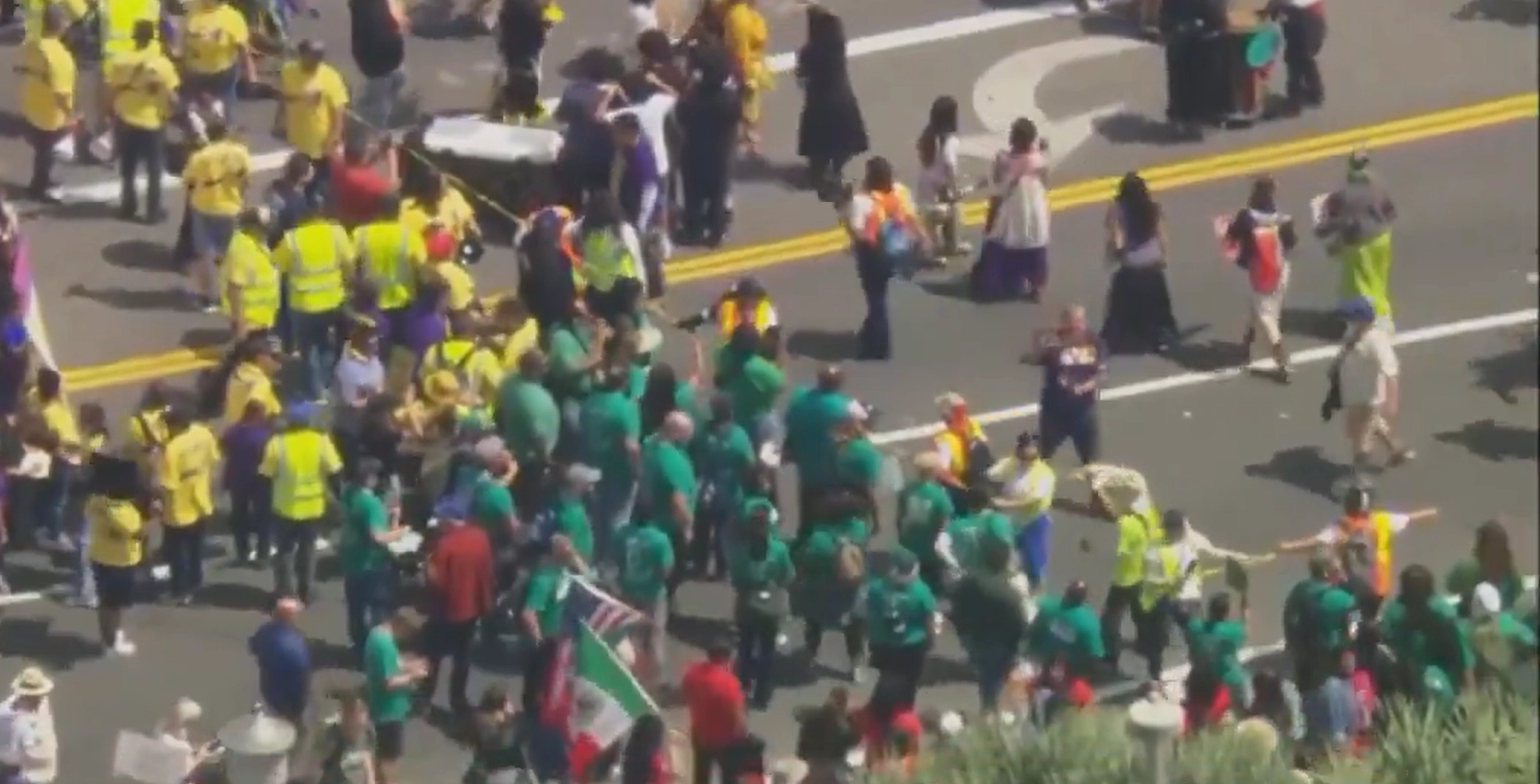
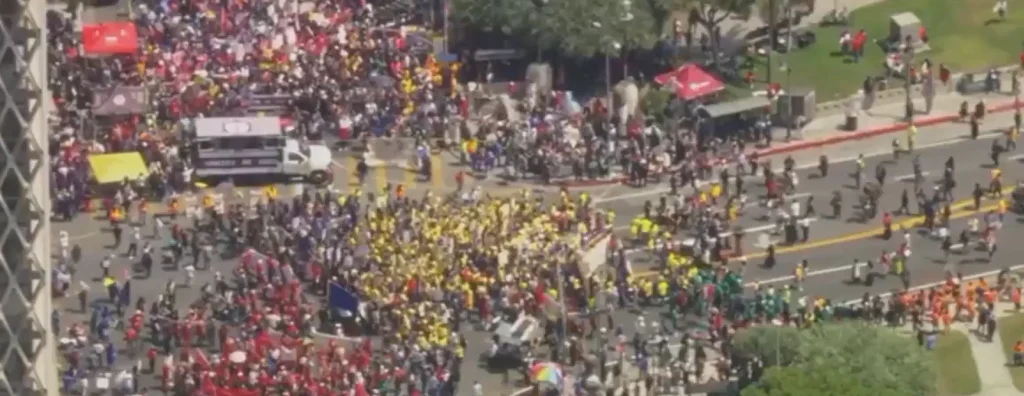
These May Day actions on May 1, 2026, delivered exactly what the professional agitators planned: coordinated shutdowns in Los Angeles, New York City, Washington DC, Chicago, and dozens of other cities. Organizers pushed thousands into the streets under the “May Day Strong” banner demanding “workers replace billionaires” at the center of power.
They called for a full economic blackout—no jobs, no classes, no purchases—to flex muscle against the current administration’s agenda.
This operation came straight from union networks, activist coalitions, and funded nonprofits tied to globalist funding streams. Over 3,000 events hit more than 40 cities:
- In Los Angeles, crowds filled MacArthur Park and downtown routes.
- New York saw disruptions at the Stock Exchange with chains and barriers breached.
- Washington DC targeted the White House area with bused-in participants.
- Chicago clashed over school closures as teachers unions pushed students into the mix.
The pattern repeated nationwide.
These groups operate as extensions of institutional resistance. They reject the America First priorities that delivered stronger borders, energy dominance, and economic gains for actual workers. Instead they demand open borders, wealth redistribution, and weakened enforcement. Their slogan
“workers instead of billionaires“
masks the real play: undermine the systems that let regular Americans build wealth through production and innovation. The same networks that funded past disruptions now target the policies cutting illegal immigration costs and restoring manufacturing.
Intelligence ties show these efforts link back to long-running funding from foundations and dark money channels that sustained color revolutions abroad and domestic unrest here. Buses rolled into DC with pre-printed signs and matching logistics. Arrests followed in multiple cities for blocking commerce and chaining to infrastructure. This is not organic worker anger. It is manufactured pressure to stall the administration’s momentum on trade deals, energy exports, and immigration control. The $70 billion proposed for border enforcement triggered direct backlash through “abolish ICE” chants.
🚨May Day protesters growing in LA, NYC, DC, Chicago & beyond, calling for no work, no school, no shopping!
— Gunther Eagleman™ (@GuntherEagleman) May 1, 2026
“Workers instead of billionaires” they say. LMAO.
These professional agitators want everyone to sit out while the rest of America actually builds and works.
Pure… pic.twitter.com/uYArmvVg3i
Chicago exposed the playbook. Teachers unions fought public schools to shut down so kids could join marches. This pulls in the next generation under the cover of labor rights while actual working families lose a day of income and education. Los Angeles events centered near sensitive areas with heavy immigrant participation, many tied to networks that benefit from lax enforcement. New York actions hit financial districts to signal opposition to market-driven growth. The economic blackout aimed to create visible disruption that corporate media would amplify as popular revolt.
Real workers did not drive this. Construction crews, factory shifts, truck drivers, and small business owners kept operations running where possible. The participants represent funded cadres:
- Professional organizers and activists paid through nonprofit pipelines.
- Students released from classes to join the disruption.
- The “no kings” follow-on from earlier protests shows continuity in the resistance structure.
Their demands for no shopping punish the retail and service sectors that employ millions. This hits the exact economy the administration rebuilt after prior shutdowns.
Power structure analysis reveals the control system at work. Unions like those in education and public services hold leverage over daily life. They coordinate with open-border advocates and wealth redistribution lobbies. Suppressed data on protest funding points to millions funneled through intermediaries that also backed previous anti-administration efforts. These operations test public tolerance for disruption while preparing legal and media defenses. Arrest numbers stay low relative to scale because local authorities in blue cities limit enforcement. This preserves the machine for future cycles.
The administration’s response stayed measured. Trump kept focus on delivering results—border metrics improved, energy production records set, wage growth in key sectors. These protests represent the institutional counterattack when electoral and policy routes fail. Globalist interference channels resources to create chaos that pressures policy reversal. The
“workers over billionaires“
line ignores how America First policies lifted lower and middle income earners through deregulation and domestic priority. Billionaires who build infrastructure, tech, and manufacturing get attacked while foreign cartels and domestic elites who profit from open systems face no scrutiny.
This May Day operation confirms the deep state alignment with street-level disruption. Networks inside government, unions, and NGOs coordinate to maintain control mechanisms. They push narratives of billionaire capture to distract from their own entrenched power in bureaucracy, academia, and finance. The economic costs fall on working families who skipped shifts or dealt with closed services. Schools lost instruction time. Commerce dipped in targeted zones. This achieves the goal of signaling strength while eroding public confidence in normal operations.
Backroom connections tie these events to ongoing efforts:
- Against America First trade strategies and enforcement priorities.
- Timing actions to overlap with key budget and policy debates.
- Utilizing pre-positioned resources, training, and communication grids.
Intelligence community contacts confirm the same donor profiles and activist rosters from prior operations. This is sustained pressure designed to force concessions or create conditions for larger confrontations.
The public saw through much of it. Social media captured the busing, the matching gear, and the low participation from actual production workers. Real labor gains come from policies that prioritize American citizens in jobs, housing, and wages—not imported disruption. These agitators expose their alignment with forces that benefit from weakened sovereignty and controlled economic outcomes. The administration advances regardless. Policies continue to favor production over protest, citizens over imported pressures, and results over rhetoric. This May Day exposed the resistance network in operation. It changes nothing about the direction of restored national priorities. The machine deploys its assets and the country keeps building.
