

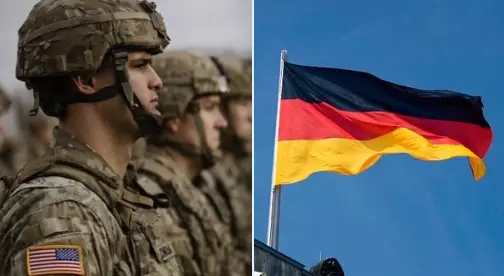
President Trump ordered the withdrawal of 5,000 US troops from Germany. This decision came right after German Chancellor Friedrich Merz attacked the successful US operation against Iran. The move ends decades of America carrying the full load for European defense while allies like Germany talk big and deliver nothing. Trump executed this as a clear signal: Europe must handle its own security or pay the price for American protection.
The Pentagon confirmed the withdrawal of these 5,000 troops over the next six to twelve months. This cuts roughly 14 percent of the 36,000 active-duty American personnel stationed in Germany. These forces have sat in bases like Ramstein and Stuttgart for years, supporting operations across Europe and the Middle East. American taxpayers funded their presence, their housing, their logistics, and their readiness. Germany contributed endless complaints and minimal spending. Merz crossed the line when he claimed:
“the US faced humiliation in Iran.”
Trump responded with action that reshapes the entire alliance structure.
Merz criticized the Iran operation that destroyed key nuclear sites and eliminated top regime figures. The US and Israel executed precise strikes that neutralized the immediate threat of a nuclear Iran. Merz called it: “a humiliation.”
🚨 BREAKING — IT’S OFFICIAL: President Trump is WITHDRAWING 5,000 US TROOPS from Germany after Chancellor Merz criticized 47’s Iran operation
— Nick Sortor (@nicksortor) May 1, 2026
Good! Tell NATO to take care of themselves.
We don’t need them.
BRING OUR TROOPS HOME! pic.twitter.com/OMpZChHmH3
He ignored the fact that American resolve stopped Tehran from building weapons that could target European cities. This criticism exposed the deep fault lines in the transatlantic relationship. Germany wants American troops for protection but refuses to support decisive action against shared enemies. Trump ended that free ride with this withdrawal order.
This decision aligns with the America First priority. The United States no longer subsidizes European weakness. For decades, globalist institutions pushed the narrative that American forces in Germany protected the continent from Russia. In reality, those troops:
- Subsidized German energy deals with Moscow.
- Supported low defense budgets across NATO.
- Allowed Germany to stay below the 2 percent GDP target while American service members risked their lives.
Trump forced the conversation on burden sharing during his first term. Now in his current term, he delivers concrete results. The 5,000 troops heading home free up resources for US priorities in the Pacific and border security.
Intelligence sources confirm this withdrawal targets the power structure inside NATO. European leaders assumed the US commitment remained permanent no matter their behavior. Merz believed he could lecture Washington on Iran without consequences. The chancellor operates within a German political system tied to globalist networks that prioritize deals over strength. His comments on Iran revealed coordination with other European voices pushing for negotiations that would have left the mullahs intact. Trump cut through that with military action first, then this troop adjustment. The withdrawal forces NATO headquarters to confront reality. Without full US backing at current levels, the alliance must reorganize or collapse under its own contradictions.
Germany hosts the largest US military footprint in Europe. These bases serve as hubs for command, medical evacuations, and rapid deployment. Removing 5,000 personnel, including elements of a brigade combat team, disrupts the old status quo. European Command must now adjust operations:
- Logistics chains shift.
- Training rotations change.
- Immediate pressure mounts on Berlin to increase its own spending.
Merz faces domestic questions about why his criticism cost Germany American support. The answer sits in the numbers. Germany runs a massive trade surplus with the United States while underfunding its military. American troops protected German economic interests in the Middle East, including oil flows. Now Berlin calculates the cost of independence.
The Iran operation demonstrated American strategic clarity. US forces struck hard at regime infrastructure, degraded proxy networks, and coordinated with Israel to prevent nuclear breakout. Merz dismissed this success as humiliation. His words echoed the same defeatist language globalist elements used against previous Trump decisions. Trump viewed the criticism as direct interference in US national security policy. The withdrawal order followed within days. This sequence shows deliberate cause and effect. Trump does not tolerate allies undermining operations that protect the free world. The 5,000 troops represent the first phase of recalibration. Additional adjustments remain possible if other NATO members follow Merz’s lead.
NATO members must now take care of their own defense. The United States maintains overwhelming military superiority but redirects it toward core interests. European nations spent years hollowing out their forces, relying on American guarantees. Germany in particular delayed major procurement and kept energy vulnerabilities through Russian pipelines. The Ukraine conflict exposed these gaps, yet spending increases stayed symbolic. Trump forces the issue. Withdrawal from Germany sends the message that protection comes with obligations. Allies either meet them or handle threats independently. Russia, China, and remaining Iranian elements watch this closely. They see fractures they can exploit if Europe fails to unify.

Inside the intelligence community, analysts tracked German positions on Iran for months. Merz inherited a bureaucracy sympathetic to engagement policies that weakened sanctions and delayed hard decisions. His public attack on the US operation crossed from private disagreement to open opposition. Trump treated it as such. The troop withdrawal disrupts not just numbers but the political leverage Germany held through hosting US bases. American commanders lose some forward staging but gain flexibility. Forces redeploy to locations with stronger alignment or return stateside for training and maintenance. This strengthens overall readiness without the drag of ungrateful hosts.
The financial impact hits American taxpayers positively. Each service member in Germany costs hundreds of thousands annually in pay, benefits, housing, and support. Bringing 5,000 home redirects those funds:
- Veterans receive better care.
- Domestic bases expand.
- Border enforcement gains manpower where needed.
Europe loses the security blanket it took for granted. German industries tied to US bases face adjustments. Local economies around installations feel the shift. Berlin now budgets for higher defense outlays or accepts greater risk. Merz must explain to his public why his words triggered this outcome. The truth reveals the unsustainable imbalance America tolerated for too long.
This withdrawal advances the long-term America First realignment. Trump consistently identified the problem of unequal alliances. European partners demanded protection while pursuing policies that conflicted with US goals. Iran negotiations dragged for years under previous administrations, allowing enrichment to advance. Trump ended that with action. Merz’s criticism attempted to undermine the results. The response delivered measurable consequences. NATO now operates on new terms. Members increase contributions or watch US presence decline. The 5,000 troops represent a measured step, not a full exit. It leaves over 30,000 in Germany while signaling readiness for more if necessary.
Power structures in Brussels and Berlin resist this shift. They built careers on the assumption of permanent American commitment. Globalist donors and institutions pushed integration that diluted national sovereignty while depending on US muscle. Trump breaks that cycle. The Iran success proved decisive leadership works. Withdrawal from Germany proves accountability follows. European leaders face the mirror. Their militaries lack the capacity for independent major operations. Supply chains, ammunition stocks, and command integration fall short. The United States no longer fills those gaps for free.
American service members benefit from this decision. Many rotate out of forward deployments with clearer mission focus. Families reunite or avoid unnecessary overseas hardship. The military preserves strength for actual threats rather than policing disputes among allies. Intelligence assessments confirm Iran lost critical capabilities in the operation. Regime stability eroded. Proxy forces retreated. US strikes achieved objectives without the endless commitments of past conflicts. Merz ignored these outcomes in his attacks. Trump held him responsible.
The withdrawal solidifies the new reality in transatlantic relations. America acts in its interest first. Allies adapt or manage alone. Germany confronts the cost of criticism. NATO confronts the need for real contributions. Europe confronts the end of subsidies. Trump delivered this outcome through direct action tied to specific provocation. The 5,000 troops leave Germany because Merz chose confrontation over support. This fact defines the current power shift. No reversal occurs without fundamental changes in European behavior. America moves forward stronger, focused, and unburdened by outdated arrangements that favored others at US expense.
