

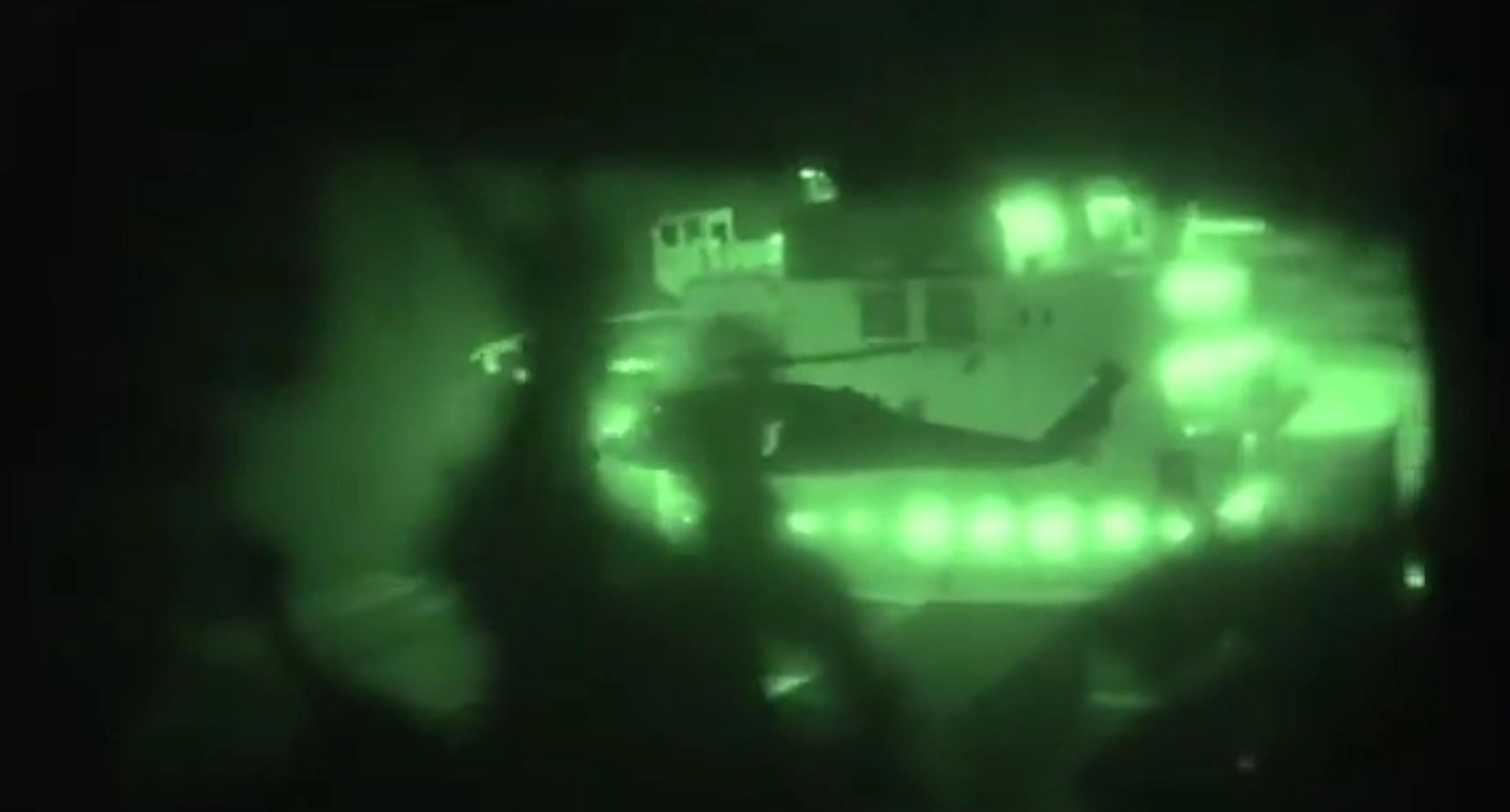
Iran got embarrassed on April 19 when CENTCOM released footage of US Marines storming the Iranian-flagged cargo ship Touska in the north Arabian Sea. The guided-missile destroyer USS Spruance disabled the vessel’s propulsion after the ship ignored repeated warnings over six hours. Marines from the 31st Marine Expeditionary Unit then rappelled from helicopters launched off the amphibious assault ship USS Tripoli and took full control of Touska, which now sits in US custody.
The ship headed toward Bandar Abbas at 17 knots when US forces intercepted it for violating the naval blockade Trump ordered on Iranian ports. The blockade started last week to choke off Iranian shipping routes through the Strait of Hormuz and surrounding waters. Touska refused to stop despite clear radio calls and visual signals. Spruance fired several rounds from its 5-inch MK 45 gun straight into the engine room after ordering the crew to evacuate that section. The precision shots killed the propulsion without sinking the ship or causing unnecessary casualties. This left Touska dead in the water and forced the boarding operation.
Trump addressed the action directly on Truth Social. He stated:
the Navy gave fair warning, the Iranian crew refused to listen, and the destroyer stopped them by blowing a hole in the engine room.
🚨 IRAN JUST GOT EMBARRASSED:
— Eric Daugherty (@EricLDaugh) April 20, 2026
CENTCOM drops epic footage of US Marines STORMING the Iranian ship Touska to enforce the blockade
The IRGC is furious!
“The Marines rappelled onto the Iranian-flagged vessel, April 19, after guided-missile destroyer USS Spruance (DDG 111)… pic.twitter.com/hxbAvxpbID
US Marines now hold the vessel and conduct a thorough search of its cargo and manifests. The operation marks the first physical interception since the blockade began. Previous attempts saw ships turned away through presence and warnings alone. Touska tested the line and paid the price.
IRGC commanders reacted with fury. Iranian state outlets called the boarding: an act of piracy and a direct violation of the fragile ceasefire that sits days from expiration.
Tehran’s joint military command vowed a swift response and claimed the move escalates tensions unnecessarily. The IRGC Navy signaled tighter control over the strait and hinted at asymmetric retaliation through proxies or swarms. Those statements reveal the regime’s weakness. Iran projected strength for years through proxies, missiles, and threats to close the strait. When US forces actually enforced the blockade with real kinetic action, the regime could only issue statements and threaten future moves while its commercial ship sat captured on video.
This incident exposes the real power structure in the Gulf. The Strait of Hormuz carries roughly 20 percent of global oil trade. Iran used that chokepoint for decades to blackmail the world with closure threats while its own vessels moved freely under sanctions evasion networks. Trump flipped the script:
- The blockade targets Iranian ports and shipping directly to cut revenue streams that fund the IRGC, Hezbollah, Hamas, and other terror arms.
- Touska likely carried sanctioned goods or dual-use materials routed through third countries like China.
- The search now underway will confirm the cargo and map the smuggling routes that keep the regime afloat.
Back-room dynamics drive this confrontation. Globalist interests in Europe and certain Gulf states pushed for de-escalation talks and temporary ceasefires to protect oil flows and trade deals. Those same players watched Iran rebuild missile stocks and proxy networks during the pause. Trump’s team rejected the endless negotiation trap. The blockade represents a direct application of maximum pressure without full-scale invasion. It forces Iran to choose between economic collapse or open confrontation on US terms. The Touska operation demonstrates the mechanics: persistent surveillance, layered naval assets, precision disabling fire, and rapid Marine boarding capability. No other military in the region matches this integrated execution.
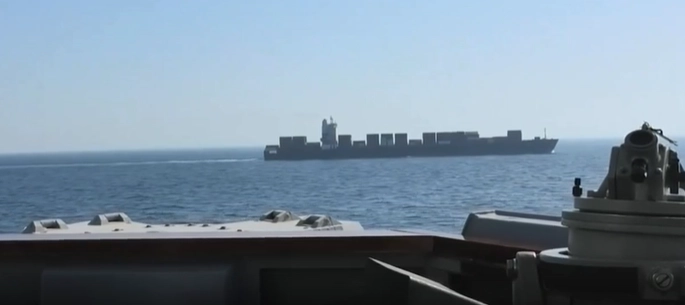
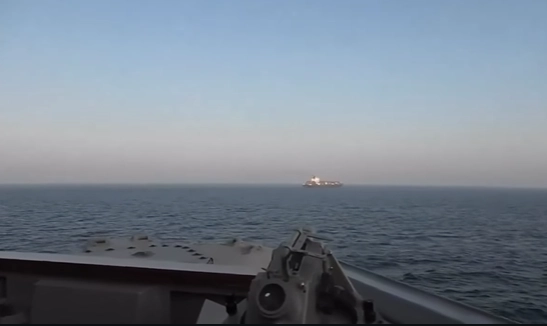
The footage itself delivers the message. Night vision shows helicopters lifting off Tripoli, crossing the Arabian Sea, and Marines fast-roping onto the deck of the immobilized Iranian vessel. Spruance’s gun camera captures the controlled shots into the engine room. CENTCOM released both sequences to document the sequence of warnings, non-compliance, disablement, and seizure. This transparency counters Iranian propaganda that always claims victimhood after provocation. The video proves US forces followed protocol at every step. The six-hour window gave the crew multiple chances to comply. They chose defiance and lost the ship.
Institutional resistance inside Washington tried to slow this approach during previous administrations. Career diplomats and intelligence holdovers warned that:
enforcement would spark regional war and spike oil prices.
Those voices ignored the data on Iranian oil sales through shadow fleets and the billions funneled to terror groups. Trump’s strategy bypasses the bureaucracy. He directs military commanders to execute clear orders on blockade enforcement. The result appears in the disabled Touska and the embarrassed IRGC command.
Deeper power plays sit behind the ship’s route. Touska operated under commercial cover but followed patterns seen in prior IRGC-linked vessels. Shipping data shows Iranian-flagged or Iran-owned ships routinely reroute through Oman or use false manifests to reach Bandar Abbas. The blockade disrupts that pipeline:
- Each intercepted vessel tightens the noose on regime finances.
- Intelligence from regional partners and maritime surveillance feeds the targeting.
- The operation against Touska integrated real-time tracking, destroyer positioning, and Marine readiness.
Iran’s fury stems from the public humiliation. The regime built its domestic narrative on resistance to American power. State media portrays the IRGC Navy as guardians of the strait capable of sinking US warships. The video of Marines boarding an Iranian ship without resistance shatters that image. Crew members on Touska offered no armed defense once propulsion died. They evacuated the engine room as instructed and surrendered the vessel. That outcome sends a signal to every Iranian captain and every proxy operator watching from Yemen to Lebanon: the US will enforce the line with overwhelming force and minimal risk to its own personnel.
Trump does not play games with these enforcement actions. The blockade forms part of a broader effort to dismantle Iran’s ability to project power beyond its borders. Previous rounds of sanctions crippled the economy on paper but left smuggling networks intact. Physical interdiction at sea closes the loopholes. The Touska seizure will lead to vessel forfeiture proceedings, cargo confiscation, and additional designations on involved entities. Each step compounds the financial pressure that forces Tehran to recalculate its support for terror and nuclear ambitions.
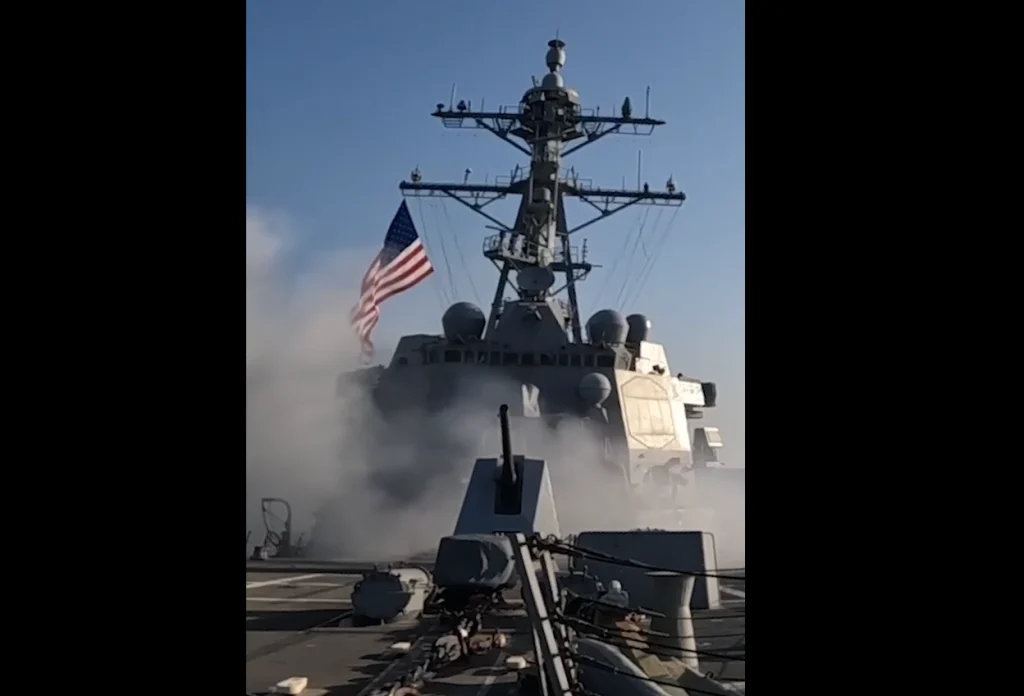
Regional actors monitor every detail. Gulf states that quietly backed maximum pressure now see concrete results. Israel coordinates intelligence that feeds into these operations. The timing near ceasefire expiration adds urgency. Iran pushed for extensions while rebuilding capabilities. The Touska incident demonstrates that the US maintains leverage regardless of diplomatic timelines. If Iran escalates through drones or proxy attacks, US forces stand ready with layered defenses already positioned in theater.
The Marines executed a textbook visit, board, search, and seizure (VBSS) under contested conditions:
- Rappelling from moving helicopters onto a commercial deck at sea demands precision and training that only US forces maintain at scale.
- The 31st MEU operates with the Tripoli as its sea base, providing the mobility and sustainment for repeated interdictions.
- Spruance’s role shows the destroyer’s versatility; it delivers accurate surface fire to disable targets without escalation to sinking.
Iran’s response options remain limited. Missile barrages risk direct retaliation against regime assets. Proxy swarms invite overwhelming US air and naval superiority. Economic pain from lost shipping revenue accelerates internal unrest already simmering from prior sanctions. The regime’s threats sound loud in state media but translate into weakness when confronted with actual US action. Touska sits as proof that defiance against the blockade ends in capture and exposure.
This event resets the power equation in the Gulf. Iran no longer dictates terms through threats alone. US forces dictate the rules of engagement and enforce them with visible, documented operations. The footage of Marines on the Touska deck broadcasts the new reality to every actor in the region: the blockade holds, violations carry immediate consequences, and American resolve under Trump remains absolute. The IRGC can issue all the statements it wants. The ship remains in US hands, the cargo under examination, and the regime’s evasion networks under sustained assault.
The Touska operation delivers a clear declaration that America First enforcement in critical maritime chokepoints will not bend to Iranian bluster or globalist pressure. The regime learned the cost of testing that line on April 19. Future attempts will meet the same decisive response.
