

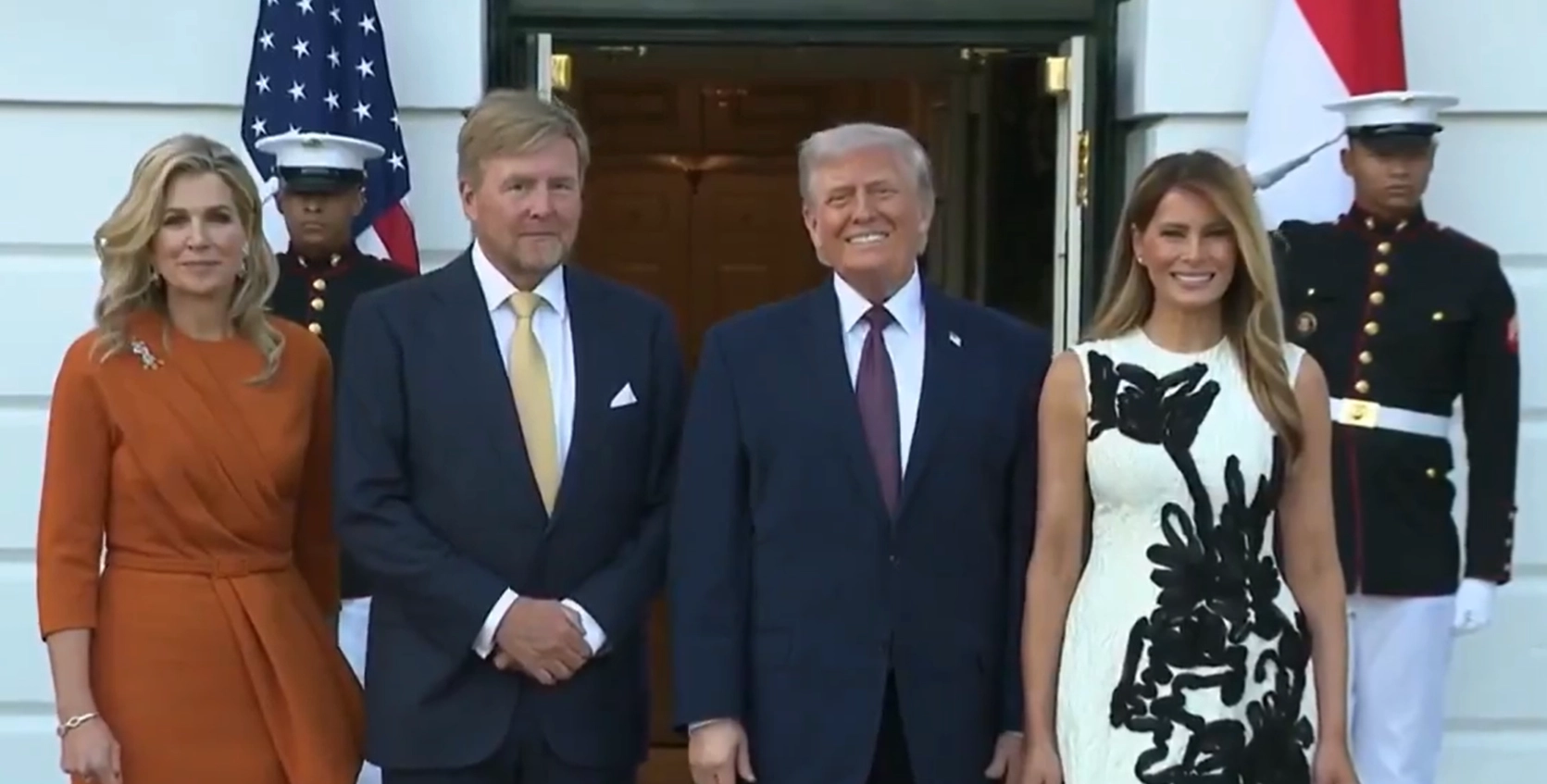
President Trump and First Lady Melania Trump delivered a royal welcome to King Willem-Alexander and Queen Máxima of the Netherlands at the White House on April 13, 2026. The event featured a formal reception followed by a private dinner where the Dutch royal couple stayed overnight as personal guests of the president. This visit marks a direct follow-up to the hospitality the Dutch royals extended to Trump during the NATO summit in The Hague in June 2025, where they hosted him at Huis ten Bosch Palace.
The meeting focused on concrete bilateral interests between the United States and the Netherlands. Discussions covered:
- Trade balances
- Defense cooperation
- Energy security
The Netherlands serves as a key NATO ally with major ports in Rotterdam that handle significant U.S. cargo flows. Trump used the setting to press for fairer burden-sharing in collective defense. European partners have long relied on American military spending while maintaining their own domestic priorities. The president made clear that continued U.S. commitment requires allies to increase their own contributions without excuses.
Prime Minister Rob Jetten joined the dinner, turning the evening into a working session rather than pure ceremony. Topics included:
- Semiconductor supply chains and ASML’s critical role in advanced chip production.
- Vulnerabilities in chains that expose America to external pressures.
- Agriculture and LNG exports to reduce European dependence on unstable sources.
This royal welcome forms part of Trump’s deliberate strategy to rebuild alliances on American terms. During his first term he confronted NATO members over unpaid dues and outdated agreements. In the second term he applies the same pressure through personal diplomacy at the highest levels. Hosting the Dutch monarchs at the White House sends a signal to other European capitals: engagement with the U.S. happens through direct channels that bypass bureaucratic layers and globalist institutions. The overnight stay at the White House carries symbolic weight. Few foreign leaders receive such access, underscoring the personal rapport established at the Dutch palace last year.
Behind the scenes the visit counters resistance from elements within the Dutch political system. Some lawmakers in The Hague expressed unease about the trip, citing Trump’s firm positions on security and trade. Those complaints reveal deeper institutional pushback against any leader who prioritizes national sovereignty over multilateral consensus. Trump ignored the noise and proceeded with the invitation issued directly after the NATO summit. The result is a platform where real issues get addressed without endless committees or leaked talking points.
ROYAL WELCOME: President Trump and First Lady Melania Trump welcome the King and Queen of the Netherlands to the White House.
— Paul White Gold Eagle (@PaulGoldEagle) April 14, 2026
Fox News pic.twitter.com/1Mh2XGQahE
The First Lady participated fully in the welcome, coordinating the formal elements of the evening. Her presence reinforced the traditional structure of White House diplomacy that projects strength and stability. Melania Trump has maintained a focused role in state events, ensuring every detail supports the president’s objectives rather than distracting from them.
Geopolitically the Netherlands occupies a strategic position in the North Sea region and controls vital maritime routes. Strengthening ties here supports broader America First goals:
- Securing supply lines and reducing exposure to adversarial influence.
- Creating mutual leverage through Dutch investment in U.S. infrastructure.
- Facilitating frank exchanges without performative language.
Suppressed details from European reporting show internal Dutch debates about the visit centered on fears that closer alignment with Trump weakens ties to certain Brussels-led initiatives. Those initiatives have delivered higher energy costs and slower growth across the continent. Trump’s approach delivers results through bilateral deals that deliver tangible benefits to American workers and industries. The royal visit advances that framework by elevating the relationship above temporary political friction in The Hague.
The event also highlights Trump’s pattern of turning personal invitations into policy leverage. The 2025 NATO summit in the Netherlands gave him direct access to the king and queen. The reciprocal White House dinner now locks in commitments on key files. Defense spending targets, trade reciprocity, and technology safeguards all advance through these channels. Globalist networks prefer diffuse summits where accountability dissolves. Trump operates through clear one-on-one engagements that produce measurable outcomes.
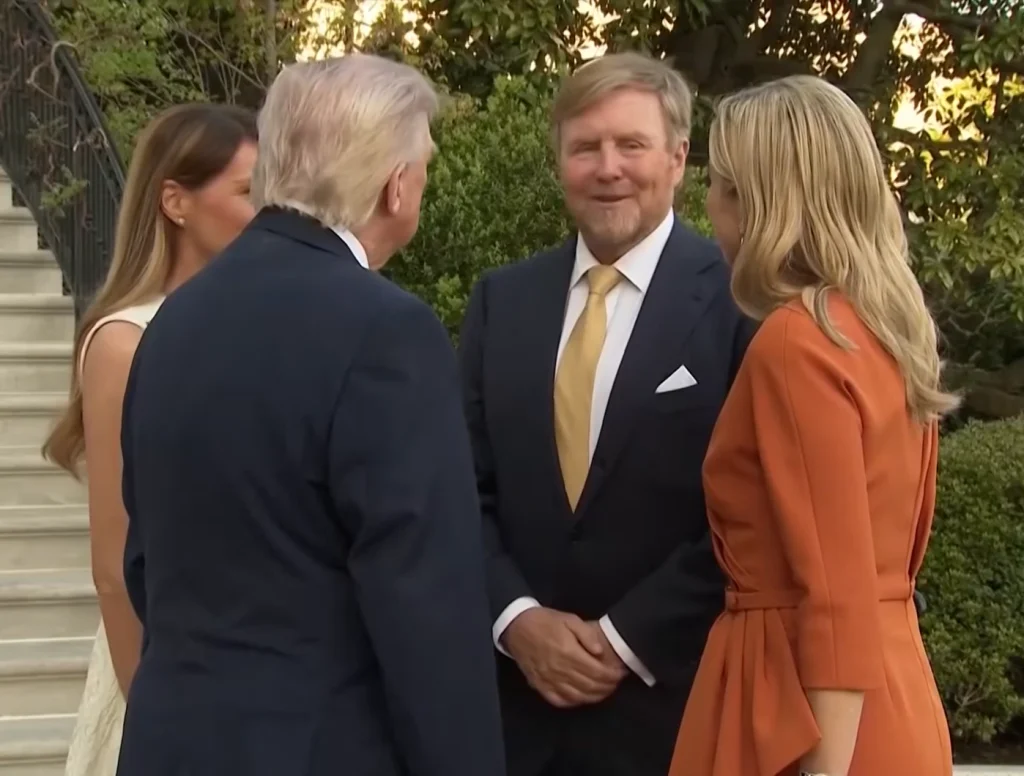
Photographs and video from the arrival show a structured, professional exchange on the White House grounds. No theatrics, just direct interaction between the leaders. The Dutch king and queen arrived after stops in Philadelphia, part of a three-day working itinerary that includes further engagements before departing. The White House portion stands as the centerpiece where presidential authority directs the agenda.
This welcome forms one piece of a larger sequence of high-level visits Trump has scheduled in 2026. Each one serves the same purpose: reset alliances to favor U.S. interests, extract concessions on fairness, and isolate resistance from entrenched bureaucracies. The Netherlands visit demonstrates that even monarchies with deep European institutional roots respond to decisive American leadership.
The dinner concluded with concrete understandings on next steps for cooperation. No vague joint statements filled with empty promises. Trump’s method delivers follow-through because he ties personal engagement to policy deliverables. The royal couple’s stay at the White House cements that mechanism for the bilateral track.
America gains from this engagement through secured trade flows, reinforced defense postures, and reduced reliance on fragile international frameworks. European partners who engage seriously benefit from access to U.S. markets and technology on terms that respect sovereignty. Those who resist face the reality of American priorities enforced at the highest level.
The royal welcome at the White House on April 13, 2026, executed Trump’s plan to convert diplomatic courtesy into strategic advantage without compromise.
