

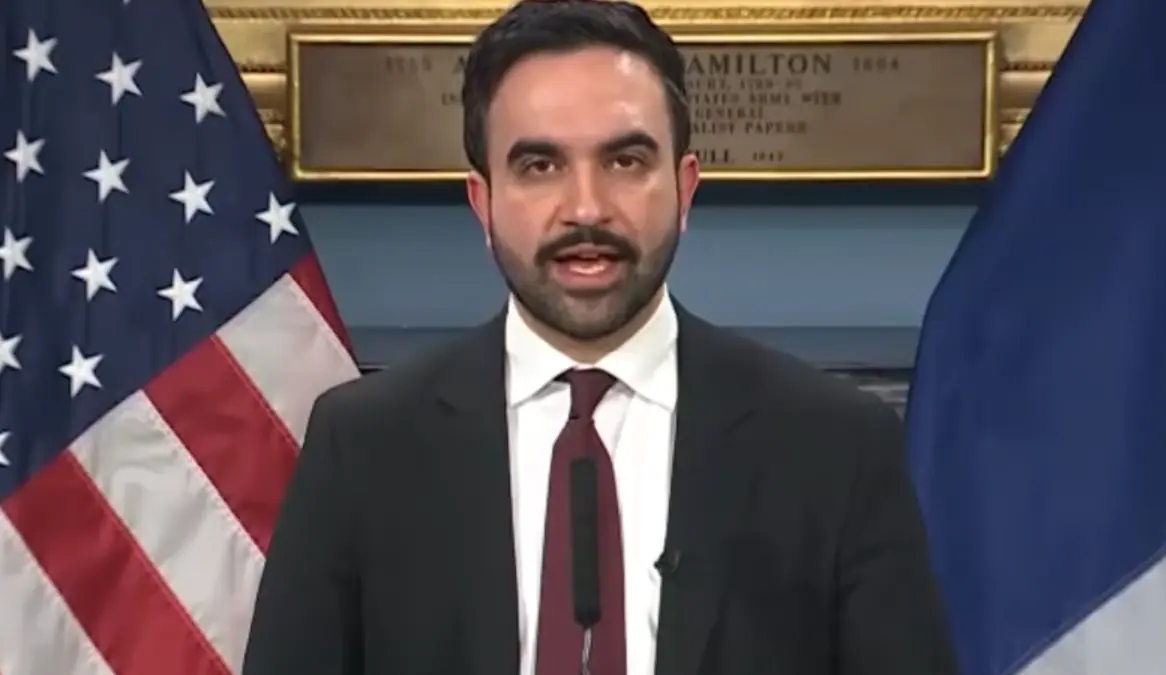
New York City Mayor Zohran Mamdani announced on February 17, 2026, that the city may need to increase property taxes to address a multibillion-dollar budget deficit. He made the statement during the unveiling of his preliminary budget proposal for fiscal year 2027, which totals $127 billion. Mamdani specified that a 9.5 percent property tax hike would generate approximately $3.7 billion in revenue for the next fiscal year, impacting over 3 million residential units and more than 100,000 commercial properties. He described this as a last-resort measure if state lawmakers in Albany fail to approve new taxes on high-income earners or corporations to help close the gap. Mamdani stated the city faces a $5.4 billion budget deficit over fiscal years 2026 and 2027.
Deficit Details and Sources
The deficit stems from a projected $5.4 billion shortfall over the current fiscal year 2026 and the upcoming 2027. This figure represents a downward revision from Mamdani’s earlier estimate of a $12 billion gap over the two years, which he adjusted based on updated revenue forecasts from Wall Street bonuses, operational efficiencies, and the use of reserves.
Independent assessments provide these specific projections:
- City Comptroller Mark Levine, who took office in January 2026, released a report on January 16 projecting a $2.2 billion deficit for fiscal year 2026 and a $10.4 billion gap for 2027, totaling $12.6 billion. Levine’s analysis attributes the shortfall not to economic downturns but to chronic underbudgeting in key areas during the prior administration of Mayor Eric Adams.
- State Comptroller Thomas P. DiNapoli issued a December 2025 report warning that gaps could reach $10 billion in 2027 and escalate to $13.6 billion by 2029, driven by slowing economic growth, rising costs, and potential federal funding cuts.
- The Independent Budget Office projected in December 2025 a $380 million deficit for 2026 and a $6.5 billion gap for 2027, noting that the city has spent more than it collected each year since 2022, eroding surpluses.
Mayor Zohran Mamdani’s Profile
Mamdani, a 34-year-old Democratic Socialist, assumed office on January 1, 2026, after defeating former Governor Andrew Cuomo in the 2025 Democratic primary. He has repeatedly blamed the deficit on “gross fiscal mismanagement” by Adams.
His background includes:
- Born in Kampala, Uganda, to Indian parents—Mira Nair, an award-winning filmmaker, and Mahmood Mamdani, a Columbia University anthropology professor.
- Immigrated to New York City at age seven.
- Graduated from Bowdoin College in 2014 with a degree in Africana Studies and co-founded the campus chapter of Students for Justice in Palestine.
- Worked as a housing counselor assisting low-income homeowners in Queens with eviction prevention before entering politics.
- Elected to the New York State Assembly in 2021 representing Astoria, Queens, where he championed progressive causes, including debt relief for taxi drivers and fare-free bus pilots.
- Ran a mayoral campaign focused on affordability, public safety reforms, and addressing the cost-of-living crisis, resulting in his historic election as the city’s first Muslim, first South Asian, and first African-born mayor.
Causes of the Deficit
The deficit traces back to fiscal practices under Eric Adams, who served as mayor from 2022 to 2025.
Key contributing elements:
- Underbudgeting in recurring expenses, as detailed in Levine’s January 2026 briefing: uniformed overtime, rental assistance, shelter costs, public assistance, Department of Education due process cases, and MTA contributions, totaling $3.8 billion in unbudgeted dollars for 2026 alone.
- Loss of nonrecurring revenues from prior years, such as federal COVID-19 aid.
- State-mandated class size reductions, adding hundreds of millions in unfunded costs.
- Expanded spending on social programs by Mamdani and progressive Democratic Party allies, without corresponding revenue increases, which worsened the structural imbalance.
Property Tax History in New York City
New York City relies on property taxes as a primary revenue source, forming a significant portion of its budget.
Historical milestones:
- Last major increase: 2003 under Mayor Michael Bloomberg, with rates rising 18.5 percent to recover from the post-9/11 economic slump and the early 2000s recession.
- Preceding stability: Rates remained steady in the 1990s, but the 2003 hike shifted burdens unevenly due to the four-class system established by state legislation in 1981 (S7000A), categorizing properties into residential, multi-family, commercial, and utility classes with different assessment ratios.
- Revenue growth: Property taxes have increased with market values; for example, citywide market values exceeded $1.2 trillion in fiscal year 2019, up 8.8 percent from the prior year.
- Recent adjustments: A 1 percent class shares cap in October 2025 redistributed taxes from single-family homes to apartments and commercial properties.
- System criticisms: The setup favors wealthier owners through opaque assessments and abatements, evident in multimillion-dollar condos receiving minimal tax bills based on hypothetical valuations.
Mamdani’s Budget Proposal Breakdown
Mamdani’s proposal supports his campaign pledges for initiatives such as universal childcare, free MTA buses, and expanded housing subsidies, reallocating from the $127 billion budget.
Core components:
- $38 billion allocated to the Department of Education, marking a $3 billion increase.
- $980 million drawn from rainy-day reserves for 2026, with additional withdrawals planned for 2027.
- Opposition from Governor Kathy Hochul: On February 16, she stated she is “not supportive of a property tax increase” and offered $1.5 billion in state aid over two years to narrow the gap.
- Implementation requirements: Mamdani can enact the tax rise without state approval but requires City Council support, where progressive members dominate.
Public and Stakeholder Reactions
Reactions emerged quickly and showed divisions.
Notable responses on X (formerly Twitter):
- Nightingale Associates pointed out impacts on commercial real estate, affecting over 100,000 businesses.
- Conservative accounts like A New Wave Right described it as “you get what you vote for”, connecting it to Mamdani’s socialist policies and plans to access retiree funds.
- Landlord Eric Bonaparte indicated he would pass tax increases to tenants, showing effects on renters.
- The Western Journal covered it as the first major hike in decades.
Economic analysts note that higher taxes could speed up outmigration, amid existing strains from high living costs and post-pandemic remote work trends.
Broader Implications
The proposal’s effects go beyond revenue generation.
Specific consequences:
- Disproportionate burdens on middle-class homeowners and small businesses, which could hinder recovery in retail and office sectors with high vacancy rates.
- Potential strain on relations with Albany, as Mamdani advocates for progressive tax reforms during state fiscal difficulties.
- Recommendations from fiscal monitors like the Citizens Budget Commission: Focus on efficiencies, including technology use and repealing the class size mandate, to address gaps without hikes.
- Risks without intervention: Outyear gaps could expand to $10 billion annually, leading to deeper service cuts.
Deficits in Other Major U.S. Cities
Examinations of other cities show parallel fiscal pressures from underfunded pensions, expiring federal aid, and economic slowdowns. New York City’s situation matches patterns in Chicago and Philadelphia, with amplified shortfalls from unfunded liabilities. Houston and Boston have managed gaps via cuts and reserves, but forecasts signal increasing risks absent reforms. Federal changes, like cuts under the One Big Beautiful Bill Act, heighten uncertainty, pushing dependence on local taxes and efficiencies.
Chicago
- Annual/short-term deficit: $1.2 billion closed for FY 2026; $163 million lingering; $1.15 billion projected for 2026 before adjustments.
- Long-term/total shortfall: $41.1 billion (Truth in Accounting: $42,600 taxpayer burden, F grade); losses in 10 of past 12 years, over $500 million in 2022-2023, nearly $1 billion in 2024.
- Key factors: Unfunded pensions (25 percent funded); economic slowdowns.
- Actions: $16.6 billion FY 2026 budget; $473 million in new taxes/fees (shopping bags, rideshares, alcohol, online gaming); eliminated grocery tax; potential emergency cuts.
- Projections/risks: Growing shortfalls; long-term pension risks.
Los Angeles
- Annual/short-term deficit: Nearly $1 billion closed for FY 2025-2026; $1.8 billion in 2024 (Truth in Accounting: $1,300 taxpayer burden, C grade); $877 million for LAUSD in 2026-2027.
- Long-term/total shortfall: Not specified.
- Key factors: Worsening financial condition; enrollment declines and expiring federal funds in schools.
- Actions: $11.8 billion balanced budget; cuts including 310 vacancies and $88.9 million reductions; LAUSD: 657 layoffs to save $150 million in $1.4 billion stabilization plan.
- Projections/risks: Statewide $18 billion for California in 2026-2027 (LAO); $2.9 billion deficit (Newsom proposal) with $23 billion reserves.
San Francisco
- Annual/short-term deficit: $936 million over FY 2026-2027 and 2027-2028 ($296 million first year, $640 million second).
- Long-term/total shortfall: Projected to $1.2 billion by 2029-2030.
- Key factors: Federal policy changes causing $220 million loss; expiring pandemic relief.
- Actions: $400 million cuts (service reductions, vacancy eliminations); departments propose 15 percent ongoing cuts; five-year plan assumes 3 percent reserve by 2028-2029; SFMTA$300 million annual deficits from July 2026.
- Projections/risks: Potential severe transportation service cuts.
Philadelphia
- Annual/short-term deficit: $479 million for 2026 (fund balance to $471 million); deficits through 2029 (balance to $45 million); $466 million for School District in 2027 ($306 million covered by reserves in 2026).
- Long-term/total shortfall: $9.4 billion (Truth in Accounting: $17,000 taxpayer burden, D grade).
- Key factors: Operating deficits; school funding gaps.
- Actions: $6.84 billion operating budget for 2026; state $151 million more for schools (Shapiro proposal).
- Projections/risks: Persistent deficits; eroding fund balances.
Houston
- Annual/short-term deficit: $220 million closed for FY 2026 (briefly $320 million after court ruling).
- Long-term/total shortfall: $3.5 billion (Truth in Accounting: $4,800 taxpayer burden, C grade).
- Key factors: Court rulings on funds; general fund spending reductions.
- Actions: $7 billion budget; $122 million cuts (no service reductions); 2.4 percent general fund cut ($74.5 million); drew down balance by over $100 million.
- Projections/risks: Potential $463 million by 2030 without new revenue.
Boston
- Annual/short-term deficit: No major annual gap; $53 million for Public Schools in 2026.
- Long-term/total shortfall: Commercial real estate declines: $135 million in 2026 to $550 million in 2029, totaling $1.7 billion over five years.
- Key factors: Enrollment declines; expiring federal funds; commercial declines.
- Actions: $4.8 billion FY 2026 budget (4.4 percent growth, no new positions); school hiring freeze; state $60.9 billion budget (Healey vetoed $130 million); MBTA$1.1 billion state aid but $219 million hole in 2028.
- Projections/risks: Growing risks from commercial sector.
These deficits highlight deferred accountability in budgeting practices, requiring transparent reforms to avoid escalation.
