

Report: CJNG Retaliation Following the Death of “El Mencho”
On February 22, 2026, gunmen from the Jalisco New Generation Cartel (CJNG) launched a coordinated retaliation across Mexico after Mexican military forces killed their leader, Nemesio Rubén Oseguera Cervantes, known as “El Mencho,” during an operation in Tapalpa, Jalisco state.
The military raid targeted Oseguera in his home state. The operation resulted in a shootout that killed Oseguera, six of his accomplices, and possibly others in the immediate confrontation. Mexican authorities, including the Defense Secretary General Ricardo Trevilla Trejo, confirmed the death of the cartel boss.
CJNG gunmen responded immediately:
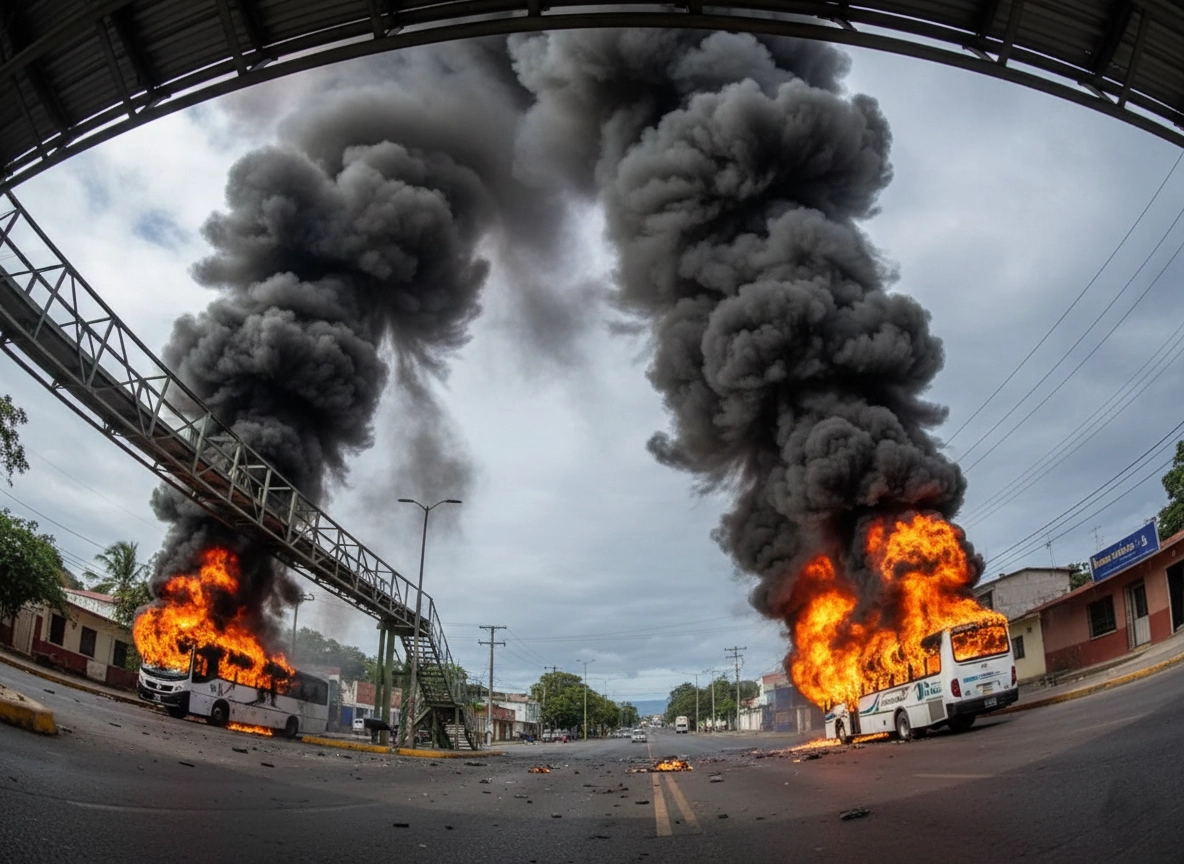
- They set up over 250 roadblocks using burning vehicles in at least 20 Mexican states.
- The roadblocks involved torching cars, trucks, buses, and other vehicles to block highways, urban streets, and key routes.
- This tactic prevented rapid military and police movement while demonstrating the cartel’s reach and ability to disrupt national infrastructure.
The violence spread beyond Jalisco. In Jalisco, the epicenter, gunmen blocked more than 65 roads, including major highways near Guadalajara and Puerto Vallarta. They torched vehicles on the Mexico-Puebla highway, in Acatlan de Juarez, and in tourist areas like Puerto Vallarta, where buses and stores burned. Similar actions occurred in Michoacán, Tamaulipas, Guanajuato, Colima, Nayarit, Aguascalientes, and other states. Reports documented incidents in western, northern, and central regions, showing the cartel’s operational network extended far from its Jalisco base.
Attacks targeted security forces directly:
- In Jalisco, CJNG gunmen carried out six separate ambushes and clashes against National Guard units.
- Mexico’s Secretary of Security and Citizen Protection, Omar García Harfuch, reported that 25 National Guard members died in these attacks.
- Additional fatalities included one agent from the state prosecutor’s office, one security guard, and at least one civilian woman.
- Some sources indicated higher totals when including presumed cartel members killed in counter-responses, but civilian deaths remained low compared to security force losses.
The roadblocks caused immediate chaos. In Guadalajara, Mexico’s second-largest city and Jalisco’s capital, residents locked themselves in homes as streets emptied. Schools closed across multiple states on Monday, February 23. Airports faced disruptions, with flight cancellations in Guadalajara and Puerto Vallarta stranding travelers, including international tourists. Public transportation halted in affected areas. Businesses shut down, and mass events canceled. In Puerto Vallarta, authorities issued shelter-in-place advisories as gunmen targeted gas stations, stores, and commercial zones.
The U.S. Embassy and State Department issued warnings to American citizens in Mexico, urging them to shelter in place due to ongoing road blockages and criminal activity. Canadian airlines canceled flights to impacted regions. The violence disrupted daily life for millions, paralyzed commerce on major corridors, and exposed the cartel’s capacity to coordinate nationwide actions within hours.
Mexican President Claudia Sheinbaum addressed the crisis publicly. On Sunday evening and Monday, she urged calm and stated that authorities had cleared all roadblocks. By late Sunday night into Monday, February 23, security forces removed the burning barricades and restored access to highways. Sheinbaum praised the armed forces for their actions in the initial operation and emphasized that peace and normalcy returned to most of the country.
The retaliation highlighted ongoing failures in containing cartel power despite leadership strikes. CJNG, under Oseguera, built one of Mexico’s most violent and expansive organizations, trafficking fentanyl, methamphetamine, and cocaine to the United States and beyond. Oseguera ranked among the U.S. most-wanted fugitives for years. His death marked a significant security success for Mexican forces, backed by intelligence cooperation, but the immediate backlash showed the limits of decapitation strategies against entrenched groups.
Law enforcement response:
- Authorities detained over 90 individuals linked to the violence in various states.
- In Guanajuato, a CJNG stronghold, officials reported 55 incidents across 23 municipalities and made 18 arrests.
- Jalisco saw heavy deployments to regain control.
The operation and response underscored the persistent threat from organized crime, which maintains firepower, territorial control, and rapid mobilization capabilities. The events on February 22 and 23, 2026, exposed how deeply cartel influence penetrates Mexican society and institutions, turning a single military success into nationwide disruption and the loss of 25 National Guard lives.
Mexican authorities must dismantle the CJNG’s operational networks to prevent future retaliatory waves of this scale.
